
No products in the cart.
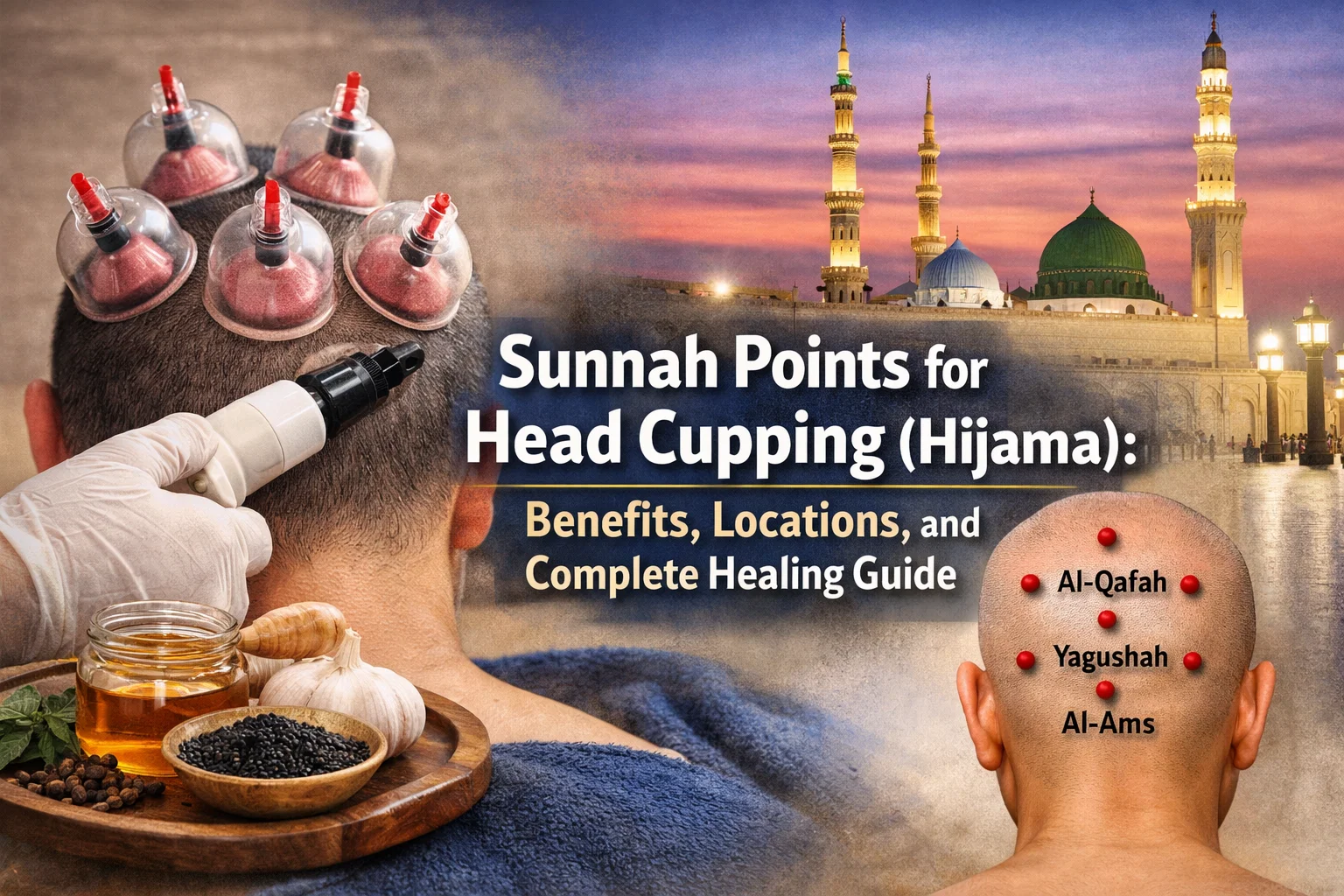
Sunnah Points for Head Cupping (Hijama): Benefits, Locations, and Complete Healing Guide
Hijama, also known as wet cupping therapy, is not just a traditional healing method but a powerful Sunnah practice of Prophet Muhammad ﷺ. Among all Hijama practices, head cupping at Sunnah points holds a special place due to its deep physical, mental, and spiritual benefits.
In today’s fast-paced life, people suffer from headaches, stress, brain fog, anxiety, and poor focus. Sunnah head cupping addresses these issues naturally by working on specific prophetic points that regulate blood flow, nerves, and overall balance of the body.
This guide explains Sunnah points for head cupping, their exact benefits, scientific relevance, and best practices, in a clear and authentic way.
What Are Sunnah Points in Hijama?
Sunnah points are specific locations on the body where Hijama was practiced or recommended by Prophet Muhammad ﷺ. These points are not random; they are strategically connected to major veins, nerves, and energy pathways.
Hijama performed on Sunnah points is believed to be more effective because it combines physical treatment with prophetic wisdom. This balance between faith and healing is why Hijama has remained relevant for centuries.
Unlike general cupping points used only for pain relief, Sunnah points focus on overall detoxification, circulation, and balance.
Why Head Cupping Is a Powerful Sunnah Practice
The head controls almost every function of the body. It contains the brain, major blood vessels, and a complex nervous system. When stagnant blood, toxins, or pressure build up in this area, it leads to headaches, stress, mental fatigue, and sleep disorders.
Head cupping helps by:
- Improving oxygen-rich blood flow to the brain
- Removing stagnant and toxic blood
- Relaxing the nervous system
- Restoring mental clarity and emotional calm
This is why head Hijama was practiced even during the time of the Prophet ﷺ.
How to Prepare for Head Cupping Therapy (Hijama)
If you are searching for how to prepare for head cupping therapy, this complete head Hijama preparation guide will answer your questions. Proper head cupping therapy preparation improves results, safety, and comfort. Before your head Hijama session, eat a light meal 2–3 hours earlier, avoid heavy or oily food, stay hydrated, and follow basic pre care instructions for head cupping therapy. If you are on medication, especially blood thinners, inform your practitioner. These simple head Hijama preparation tips help make your scalp cupping therapy more effective.
Do I need to shave my head for Hijama?
Many people ask, “Do I need to shave my head for Hijama?” The answer is clear: there is no need for hair removal or shaving your head before Hijama. We perform head Hijama without shaving using advanced technology and modern techniques. Our hair-friendly head cupping therapy allows Hijama on head without cutting hair, with no bald patches and no trimming required. This modern Hijama without shaving scalp method ensures a safe, hygienic, and professional experience for both men and women seeking non-shaved head cupping therapy.
Whether you are looking for wet cupping on head preparation, a professional hair-safe Hijama treatment, or safe head cupping therapy without hair removal, proper preparation combined with advanced no-shave technology ensures the best results.
Main Sunnah Points for Head Cupping
Al-Akhda’ain (The Two Veins of the Neck)
Al-Akhda’ain refers to the two major veins on both sides of the neck. These veins play a vital role in supplying blood to the brain.
Hijama on this Sunnah point helps reduce head pressure, improves circulation to the brain, and relieves conditions such as migraines, tension headaches, and dizziness. It is especially beneficial for people who experience neck stiffness, high stress, or long screen exposure.
Al-Kaahil (Upper Back Between the Shoulders)
Although Al-Kaahil is not directly on the head, it is deeply connected to head health. This point acts as a central blood and energy hub.
Cupping on Al-Kaahil supports head Hijama by improving overall circulation, reducing inflammation, and releasing stored tension that affects the neck and head. Many practitioners combine Al-Kaahil with head points for maximum results.
Yafookh / Qumhudwah (Top of the Head)
This is the most well-known Sunnah point for head cupping. It is located at the crown of the head.
Hijama at this point is reported in authentic narrations and has been historically practiced for deep healing. This point directly influences brain circulation, nervous system balance, and mental clarity.
It is often used for chronic headaches, mental fatigue, anxiety, and emotional stress.
Benefits of Sunnah Head Cupping
Hijama on Sunnah head points offers both immediate relief and long-term balance.
It helps relieve chronic headaches and migraines by reducing pressure and improving blood circulation. Many people experience mental calm and reduced anxiety after the session due to nervous system relaxation.
Head Hijama also improves focus, memory, and clarity by enhancing oxygen supply to the brain. People suffering from brain fog, stress-related confusion, or mental exhaustion often benefit greatly.
It supports sinus health, eye strain relief, and better sleep quality. On a deeper level, many people report emotional lightness and spiritual peace after following this Sunnah practice.
Scientific Perspective on Head Hijama
From a modern perspective, Hijama works by creating controlled suction that stimulates blood flow and removes stagnant blood. This process may help reduce inflammation and improve local circulation.
Studies suggest that cupping therapy activates the parasympathetic nervous system, which helps reduce stress hormones and promotes relaxation. Improved circulation to the brain supports better cognitive function and nerve health.
While Hijama is not a replacement for medical treatment, it works as a complementary therapy that supports the body’s natural healing mechanisms.
Best Time to Perform Sunnah Head Hijama
According to Sunnah, the best days for Hijama are the 17th, 19th, and 21st of the Islamic lunar month. These days are believed to enhance detoxification and healing effects.
Morning time is generally preferred, and Hijama can be done while fasting or non-fasting, depending on individual strength and practitioner advice.
Who Should Consider Head Hijama?
Head Hijama is suitable for people who experience frequent headaches, stress, anxiety, poor sleep, or mental fatigue. It is also beneficial for office workers, students, and individuals exposed to long screen hours.
People with sinus issues, eye strain, or emotional imbalance may also benefit.
Islamic HIjama Clinic Near You
If you are searching for a safe head cupping without shaving near you, always choose a professional clinic that follows proper Sunnah principles and modern hygiene standards. Head cupping without cutting hair offers the same powerful healing benefits without the fear of hair removal.
If you are searching for a safe head cupping without shaving near you, always choose a professional clinic that follows proper Sunnah principles and modern hygiene standards. Head cupping without cutting hair offers the same powerful healing benefits without the fear of hair removal.
Safety, Precautions, and Aftercare
Hijama should always be performed by a trained and experienced practitioner, especially on the head. People with severe anemia, bleeding disorders, or serious medical conditions should consult a healthcare professional before treatment.
After Hijama, proper hydration, rest, and light meals are recommended. Avoid heavy exercise and cold exposure for at least 24 hours to allow the body to recover.
Spiritual Wisdom Behind Sunnah Hijama Points
Hijama is not only about physical healing; it is also a spiritual practice rooted in trust in Allah. Following the Sunnah with knowledge strengthens both body and soul.
The Prophet ﷺ said that Hijama is among the best forms of treatment. This shows the importance of combining faith with wisdom and responsible practice.
Conclusion
Sunnah points for head cupping offer a complete healing approach that balances physical health, mental clarity, and spiritual well-being. When performed correctly and safely, head Hijama can relieve pain, reduce stress, and restore inner balance.
By following the Sunnah with understanding, Hijama becomes more than therapy it becomes a path to holistic wellness.
FAQs
What are the Sunnah points for head cupping (Hijama)?
Sunnah points for head cupping include Yafookh (top of the head), Al-Akhda’ain (the two veins on the sides of the neck), and Al-Kaahil (upper back between the shoulders). These points were practiced or recommended by Prophet Muhammad ﷺ and are connected to blood circulation, nerves, and overall balance.
Can head Hijama improve sleep?
Head cupping may improve sleep quality by reducing mental tension, headaches, and nervous system overactivity, especially when stress or anxiety is the root cause.
Can head cupping be done without shaving hair?
Yes, head cupping without hair removal is possible when performed by a trained Hijama therapist. Using proper technique, cups are carefully placed to ensure effective suction while keeping the hair intact. It is a safe and hygienic option for those who prefer not to shave.
Is head Hijama safe?
Head Hijama is safe when performed by a trained and certified Hijama practitioner. It should be avoided by people with bleeding disorders, severe anemia, or serious medical conditions unless advised by a healthcare professional.
What is the best time to do Sunnah head Hijama?
The best days according to Sunnah are the 17th, 19th, and 21st of the Islamic lunar month. Morning time is preferred, and Hijama can be done while fasting or non-fasting depending on individual strength.
Is head cupping without shaving effective for migraines and headaches?
Yes, head cupping without shaving can still help relieve migraines, chronic headaches, stress, and sinus pressure. It works by improving blood circulation in the scalp and supporting natural detox, helping you feel lighter and more relaxed after the session.
Does head Hijama help with stress and anxiety?
Yes, head Hijama helps calm the nervous system, reduce stress hormones, and promote relaxation. Many people experience mental clarity and emotional balance after following this Sunnah practice.


Leave a Reply