
No products in the cart.

Hijama Cupping Therapy vs Acupuncture: Key Differences, Benefits, and How They Work
Traditional healing therapies have been practiced for centuries across different cultures to support health, relieve pain, and restore balance in the body. Among the most well-known are Hijama (wet cupping therapy) and acupuncture. Although both are considered alternative or complementary treatments, their methods, philosophy, and effects on the body differ significantly.
Understanding these differences helps people make informed decisions about which therapy may be more suitable for their health needs.
What Is Hijama Wet Cupping?
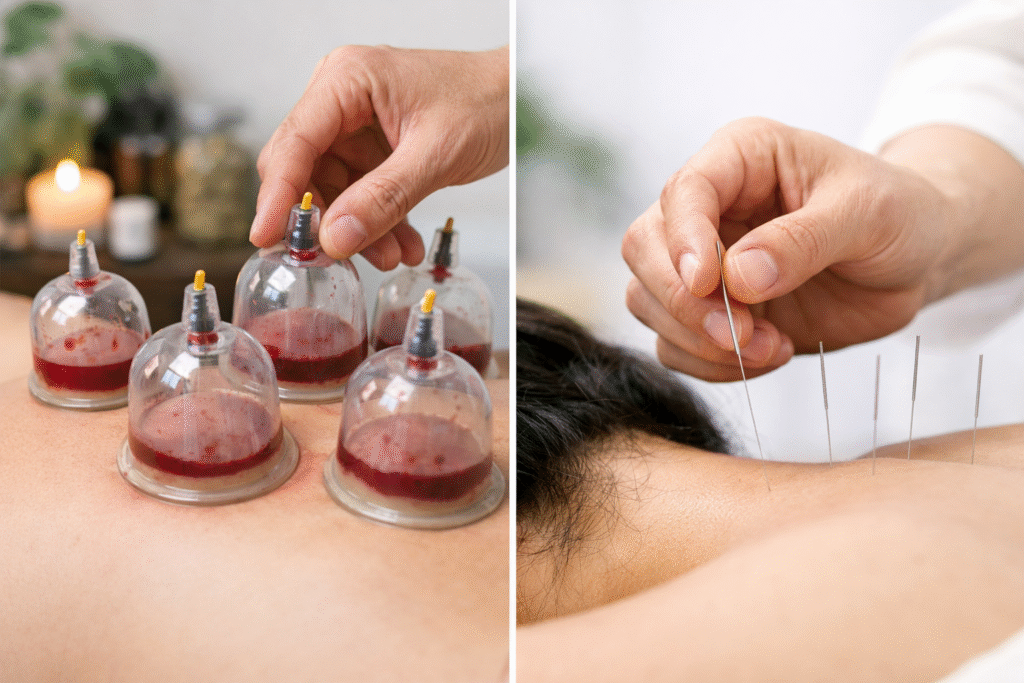
Hijama is a form of cupping therapy with deep roots in Islamic and Middle Eastern medicine. It involves creating suction on the skin using cups, followed by light superficial incisions to draw out a small amount of blood.
Purpose of Hijama
The main aim of Hijama is to:
- Improve blood circulation
- Remove stagnant or impure blood
- Reduce physical pain and inflammation
- Support natural detoxification processes
Hijama is also strongly recommended in the Sunnah of Prophet Muhammad (PBUH), making it spiritually significant for many Muslims alongside its physical benefits.
What Is Acupuncture?
Acupuncture is a key therapy in Traditional Chinese Medicine (TCM). It uses very thin, sterile needles inserted into specific points on the body known as acupoints, which lie along energy pathways called meridians.
Purpose of Acupuncture
Acupuncture aims to:
- Balance the flow of Qi (life energy)
- Regulate nervous system activity
- Relieve pain and stress
- Improve organ function and emotional wellbeing
This therapy focuses more on energy balance and neurological regulation rather than blood movement.
How Hijama Is Performed
Hijama therapy follows a clear physical process:
- Cups made of glass, plastic, or bamboo are placed on the skin
- Suction is created manually or with a pump
- Small, shallow cuts are made after suction
- A small amount of blood is drawn into the cup
- Cups remain in place for around 5–15 minutes
Common treatment areas include the back, shoulders, neck, and limbs, especially where pain or stiffness is present.
How Acupuncture Is Performed
Acupuncture relies on precision and point selection:
- Very fine needles are gently inserted into selected acupoints
- Needles may be lightly rotated, warmed (moxibustion), or electrically stimulated
- Needles remain in place for 15–30 minutes
- The procedure usually causes minimal discomfort
Treatment is guided by a full TCM diagnosis, considering physical symptoms, emotional health, and energy balance.
What is better, cupping or acupuncture?
Hijama: Traditional and Scientific Perspective
Traditional understanding
Hijama removes stagnant blood and toxins that obstruct circulation and cause disease or pain.
Modern physiological view
Suction increases local blood flow, reduces muscle tension, and stimulates immune and inflammatory responses that may promote healing.
Acupuncture: Traditional and Scientific Perspective
Traditional understanding
Acupuncture restores balance by unblocking or strengthening Qi flow through meridians.
Scientific explanation
Needle stimulation activates sensory nerves, influencing the spinal cord and brain. This triggers the release of neurotransmitters such as endorphins and serotonin, helping regulate pain, stress, hormones, and immune responses.
Common Uses and Health Benefits
Conditions Commonly Treated With Hijama
- Back, neck, and shoulder pain
- Migraines and headaches
- Fatigue and lethargy
- High blood pressure (in some traditions)
- Digestive and respiratory complaints
Conditions Commonly Treated With Acupuncture
- Chronic joint and muscle pain
- Osteoarthritis
- Stress, anxiety, and insomnia
- Digestive disorders
- Allergies
- Women’s health and fertility support
Both therapies promote general wellbeing but work through different biological and energetic pathways.
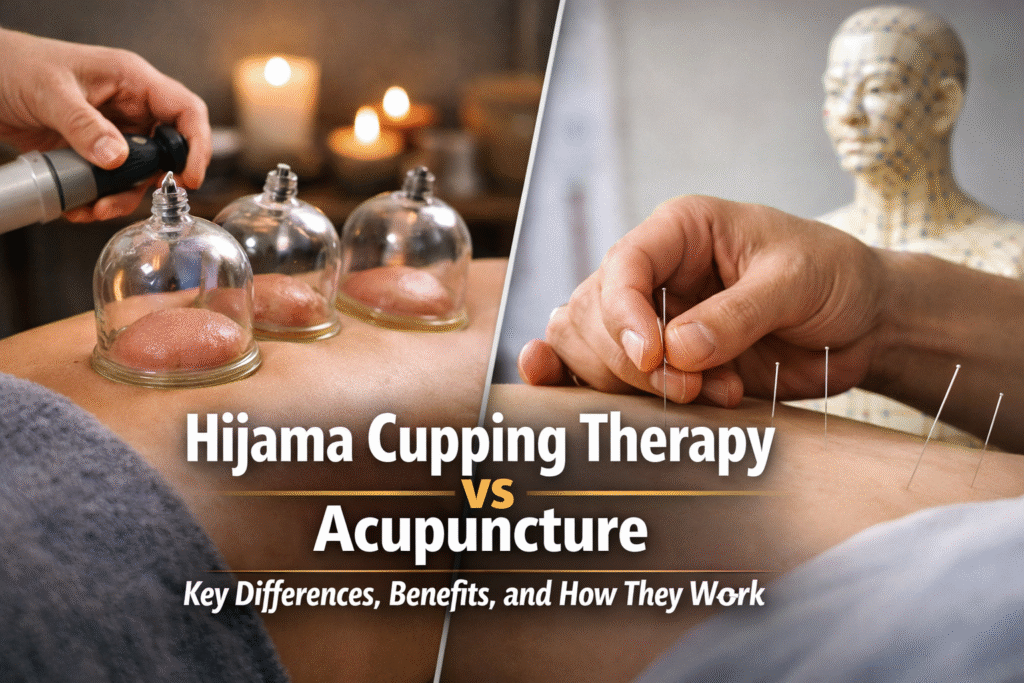
Hijama Cupping Therapy vs Acupuncture: Key Differences Explained
| Aspect | Hijama (Wet Cupping) | Acupuncture |
|---|---|---|
| Main Tool | Cups with suction and light bloodletting | Fine metal needles |
| Invasiveness | Superficial cuts with temporary blood removal | Minimal skin penetration |
| Primary Focus | Blood circulation and toxin removal | Energy balance and nervous system regulation |
| Point Selection | Painful or affected areas | Specific acupoints along meridians |
| Sensation | Strong suction, pressure, mild discomfort | Mild prick, tingling, heaviness |
| Visible Marks | Circular marks lasting several days | Usually no visible marks |
| Common Side Effects | Bruising, soreness, light bleeding | Minor bruising, dizziness (rare) |
Are acupuncture and hijama the same?
Acupuncture and Hijama are not the same, even though both are traditional healing therapies. Acupuncture works by inserting fine needles into specific points to balance energy flow and regulate the nervous system, while Hijama cupping therapy focuses on improving blood circulation and removing stagnant blood through suction and wet cupping.
Hijama also holds a unique Islamic significance, as it is a Sunnah practice recommended by Prophet Muhammad ﷺ, making it not only a physical treatment but a faith-guided form of healing.
The choice between Hijama and acupuncture depends on:
- Your health condition
- Personal beliefs and comfort level
- Medical history and bleeding risk
- Advice from a qualified practitioner
Consultation with a trained professional is essential, especially for individuals with anemia, clotting disorders, pregnancy, or chronic illness. Medical advice should always be considered alongside traditional therapy.
Cupping vs Acupuncture for Back Pain
Cupping (especially Hijama cupping therapy) and acupuncture are both used for back pain, but they relieve pain in different ways. Cupping works by creating suction on the skin to increase blood flow, relax tight muscles, and remove stagnant blood that often contributes to stiffness and pain. Many people feel relief quickly, especially in cases of muscle knots, lower back pain, and stress-related tension.
Acupuncture, on the other hand, targets specific nerve points to regulate pain signals and calm the nervous system. It is often helpful for chronic back pain, nerve-related discomfort, and conditions like sciatica. While both therapies can be effective, Hijama cupping therapy is often preferred when back pain is linked to poor circulation and muscle tightness, whereas acupuncture may suit pain connected to nerve imbalance or long-term conditions.
Final Thoughts
Hijama and acupuncture are both powerful traditional therapies with centuries of history and growing scientific interest. Hijama focuses on blood purification and circulation, while acupuncture emphasizes energy flow and nervous system balance. Each offers unique benefits when performed safely and correctly.
Choosing the right therapy begins with understanding how each works—and how it aligns with your body, beliefs, and health goals.

Leave a Reply