
No products in the cart.
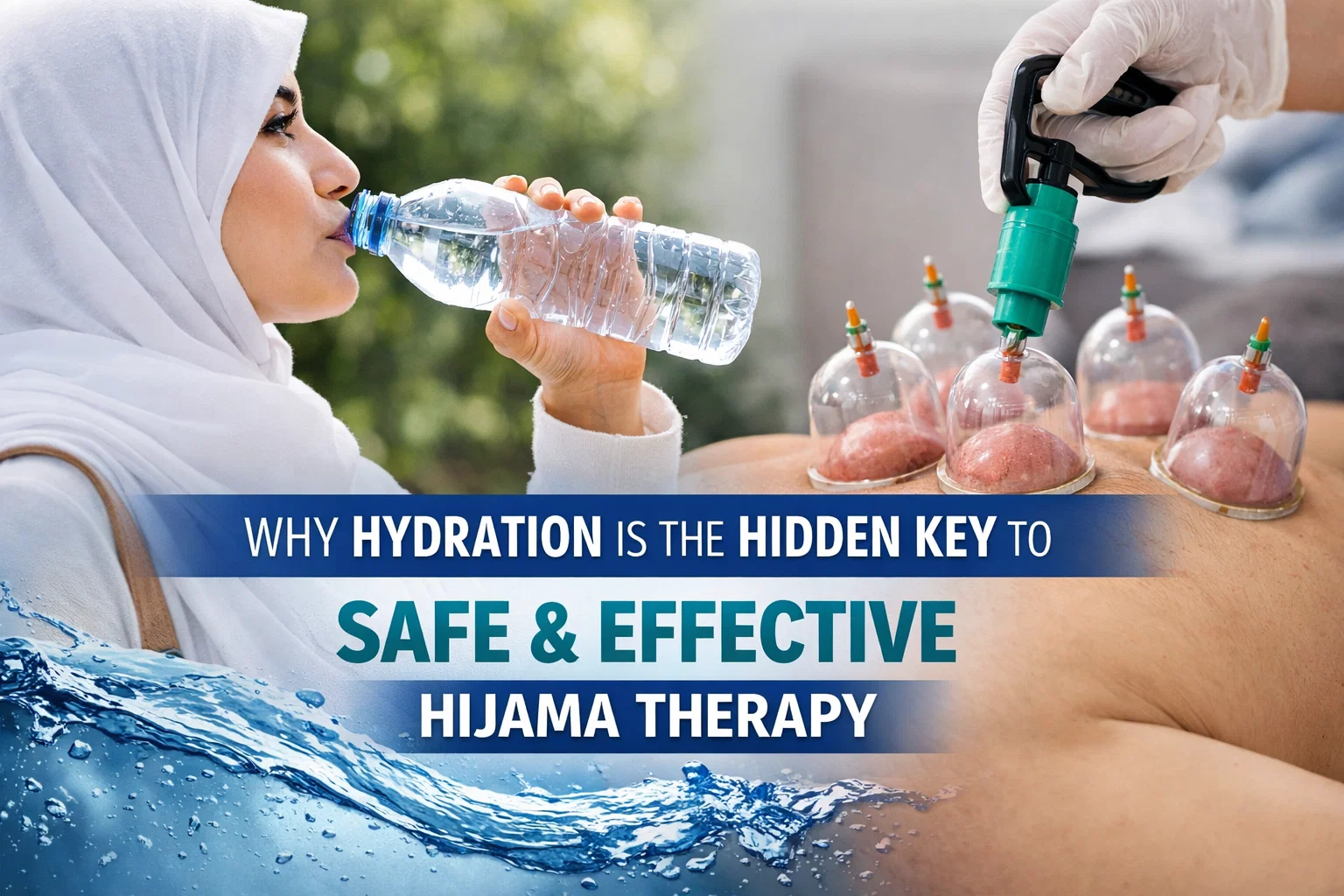
Why Hydration Is the Hidden Key to Safe & Effective Hijama Therapy
Every seasoned hijama practitioner will tell you: the session begins long before the cups touch your skin. One of the most overlooked yet absolutely critical preparation steps is proper hydration. Whether you are booking your first wet cupping therapy session or you are a returning patient well-versed in the Sunnah of Prophet Muhammad ﷺ, understanding the relationship between water and hijama can dramatically improve your results and keep you safe.
In this in-depth guide, we will explore the Islamic wisdom behind hydration, the physiology of blood viscosity, pre- and post-hijama hydration protocols, and practical tips you can apply immediately. This is not generic wellness advice this is authentic, evidence-informed guidance tailored specifically for hijama cupping therapy.
1. What Is Hijama and Why Does the Body’s Fluid Balance Matter?
Hijama (حجامة) — commonly known as wet cupping therapy — is a prophetic medicine practice in which small cups are applied to the skin to create suction, followed by superficial incisions that allow stagnant or “corrupt” blood to be drawn out. The Prophet ﷺ said: “The best of remedies you have is hijama, and if there was something excellent to be used as a remedy, then it is hijama.” (Sahih al-Bukhari, 5371)
What many people do not realise is that this prophetic healing art is deeply intertwined with the health of your blood and lymphatic system — and both of those systems depend entirely on adequate hydration.
Blood is approximately 92% water. When you are even mildly dehydrated, your blood thickens, circulation slows, and the very channels that hijama is designed to clear become sluggish. Performing hijama on a dehydrated body is like trying to drain a slow, sludgy river — the process is harder, more uncomfortable, and produces inferior results.
This is why at Hijama Natural Healing, our practitioners always assess hydration status as a fundamental part of the pre-treatment consultation.
2. The Sunnah Perspective on Purity, Cleanliness & Bodily Preparation
Islam places enormous emphasis on the care of the body (amanah). The Prophet ﷺ taught us not only when to perform hijama — on the blessed Sunnah days of the 17th, 19th, and 21st of the Islamic lunar month — but also how to prepare the body beforehand.
The scholars note that the body should be in a state of ease and readiness. An empty stomach is typically recommended (with light food if medically needed), and the intake of wholesome, purifying substances is encouraged. Water — described in the Quran as “every living thing made from water” (Al-Anbiya: 30) — is the most fundamental of these substances.
The Prophet ﷺ also recommended certain Sunnah foods that naturally support circulation and detoxification, such as black seed (Nigella sativa), honey, and dates. These work in synergy with hydration to prepare the blood for an effective hijama session.
Sunnah Tip: Drink 2–3 extra glasses of water on the Sunnah days leading up to your hijama appointment. This aligns prophetic wisdom with modern physiology, ensuring your blood is optimally fluid for the treatment.
3. The Physiology of Hydration & Blood: Why It Changes Everything
Let’s go a little deeper into the science, because understanding ‘why’ makes it far easier to commit to ‘what you need to do’.
Blood Viscosity and Cupping Efficiency
Blood viscosity refers to the thickness and stickiness of your blood. When you are well-hydrated, your plasma (the liquid component of blood) is at its optimal volume, allowing red blood cells to flow freely. During wet cupping / hijama therapy, this means:
- The stagnant blood in the capillaries rises more easily to the incision sites
- Less pressure from the cups is needed to achieve the desired draw
- The session is shorter, less intense, and more comfortable
- Post-session bruising and soreness is significantly reduced
Lymphatic Drainage and Detoxification
The lymphatic system — your body’s internal sewage network — is another major player in hijama’s benefits. Unlike blood, which is pumped by the heart, lymph relies entirely on body movement and hydration to circulate. When you are dehydrated, lymph flow becomes sluggish, which impairs the very detoxification process that hijama is meant to amplify.
Drinking sufficient water before and after your session ensures that the metabolic waste products mobilised by hijama are effectively flushed from your tissues.
Dizziness, Fatigue & Post-Hijama Weakness
One of the most common side effects reported after hijama — particularly after wet cupping — is temporary dizziness or lightheadedness. While this is normal to a degree, dehydration significantly worsens it. The blood volume temporarily drops after fluid extraction through the cupping incisions; if your baseline fluid levels were already low, this drop feels much more dramatic.
⚠️ Important: If you feel dizzy during or after hijama, this is often a sign of inadequate pre-session hydration. Always inform your practitioner if you have not consumed enough water that day.
4. Pre-Hijama Hydration Protocol: What to Drink & When
48 Hours Before Your Session:
- Aim for a minimum of 8–10 glasses (2.0–2.5 litres) of water daily
- Include herbal teas such as chamomile or ginger tea — both have mild anti-inflammatory effects
- Reduce caffeine and alcohol, which are diuretics and will counteract your hydration efforts
- Include naturally hydrating foods: cucumber, watermelon, leafy greens, and oranges
Morning of Your Session:
- Drink 2 glasses of water upon waking (approximately 500 ml)
- If your appointment is in the morning, have a light meal with hydrating foods such as fruit 1–2 hours prior
- Avoid sugary drinks and sodas, which spike blood sugar and cause subsequent dehydration
- If practising the Sunnah of light fasting before hijama, ensure you were well-hydrated the night before
You can also browse our full services page to understand what preparation is recommended for each specific type of cupping therapy, including dry cupping and moving cupping — both of which benefit from good hydration even though no blood is drawn.
5. Post-Hijama Hydration: Replenishing What Was Lost
The moments immediately after your hijama session are critical. Your body has just undergone a significant physiological event: toxins have been mobilised, circulation has been stimulated, and a small volume of blood and interstitial fluid has been removed. Your post-session hydration plan is just as important as your pre-session one.
Immediately After (0–2 Hours)
- Sip warm water gently — avoid ice-cold water as it can shock the system
- Black seed tea with honey is an excellent Sunnah-aligned post-hijama drink that supports immune response
- Eat light, easily digestible foods: dates, soup, fruit
- Rest in a comfortable, warm environment and continue sipping fluids
The Rest of the Day
- Total water intake for the day should reach at least 3 litres
- Coconut water is excellent for electrolyte replenishment — especially potassium
- Avoid strenuous exercise, saunas, or any activity that will cause further fluid loss
- Herbal infusions such as nettle leaf tea support kidney filtration and complement the detox initiated by hijama
For personalised post-treatment guidance, do not hesitate to contact our team at Hijama Natural Healing.
6. Hydration for Special Cases: Children, the Elderly & Chronic Conditions
Hydration needs vary significantly across different groups of people seeking hijama therapy.
Elderly Patients
Seniors often have a diminished sense of thirst and are at higher risk of baseline dehydration. For elderly patients receiving cupping, we recommend beginning increased water intake 72 hours before the session rather than 48, and to track intake using a simple journal or water bottle markings.
Diabetic Patients
Diabetes can affect kidney function and blood viscosity significantly. Diabetic patients should consult their physician before hijama and ensure their blood sugar is within a safe range. Hydration is especially critical in this group because high blood glucose levels are themselves dehydrating to the cells.
Children
Facial cupping and gentle dry cupping can be used with younger patients under guidance. Hydration for children should be weight-adjusted, and parents should ensure their child is well-hydrated with water and natural juices — never carbonated drinks — in the 24 hours prior.
Read more about our specialised facial cupping therapy and how hydration affects skin elasticity and treatment outcomes.
7. Signs You Were Dehydrated Before Hijama (And What to Do Next Time)
Many patients realise they were dehydrated only in retrospect — after experiencing one or more of the following during or after their session:
- Prolonged dizziness or faintness lasting more than 30 minutes post-session
- Unusually dark or thick blood (practitioner-observed)
- Excessive pain or discomfort during the incision phase
- Slower-than-expected blood flow, requiring longer suction time
- Severe fatigue lasting more than 24 hours after the session
- Headache immediately after treatment
If you experienced any of these, do not be discouraged — your next session will be dramatically better with proper preparation. Consider booking a follow-up consultation with our practitioners to refine your pre-treatment protocol.
8. What the Research Says: Hydration and Therapeutic Cupping
While hijama has deep roots in Islamic tradition, modern research is beginning to validate what our Prophetic medicine has always taught. A 2020 review published in the Journal of Traditional and Complementary Medicine found that wet cupping produces measurable effects on blood viscosity and microcirculation — effects that are amplified when patients are adequately hydrated.
The WHO Traditional Medicine Strategy 2019–2025 also emphasises the importance of patient preparation in traditional medicine practices, noting that hydration status is a key modifiable factor affecting treatment outcomes.
For a deeper exploration of the science behind blood detoxification and cupping, the National Center for Complementary and Integrative Health (NCCIH) provides a regularly updated overview of the evidence base for cupping therapy.
9. Hydrating Foods That Complement Hijama: A Sunnah-Aligned Grocery List
Hydration is not just about drinking water — it is about building your body’s fluid reserves through whole foods. Here is a practical, Sunnah-aligned list of hydrating foods to incorporate in the days around your hijama session:
| Food | Water Content | Sunnah Connection |
| Cucumber | ~96% water | Cooling, anti-inflammatory |
| Watermelon | ~92% water | Natural detoxifier |
| Dates (Medjool) | ~80% water + iron | Sunnah superfood for energy post-hijama |
| Honey in warm water | Highly hydrating | Recommended by the Prophet ﷺ for healing |
| Black Seed Tea | Herbal hydration | Anti-inflammatory, immune boosting Sunnah food |
| Pomegranate | ~82% water | Mentioned in the Quran, rich in antioxidants |
| Bone Broth / Soup | High electrolytes | Traditional healing food, post-hijama recovery |
10. Frequently Asked Questions: Hydration and Hijama
Q: Can I drink water immediately before my hijama session?
Yes — in fact, you should. Drink a full glass of water approximately 30 minutes before your appointment. Avoid drinking a very large amount immediately before the session begins, as a very full stomach during treatment can cause discomfort.
Q: Does hydration affect dry cupping and moving cupping too?
Absolutely. Even for dry cupping therapy and moving cupping, hydration affects muscle tissue pliability, skin response to suction, and the effectiveness of lymphatic drainage. Well-hydrated connective tissue responds far better to the suction stimulus.
Q: What if I am fasting (Ramadan or optional fast) and have a hijama appointment?
This is a common question with a nuanced answer. The Prophet ﷺ did perform hijama while fasting (Sahih al-Bukhari, 5694). However, for patients with health conditions or those new to hijama, it may be advisable to schedule the session after Iftar when the body can be fully hydrated. Always discuss this with your practitioner.
Q: How much water should I drink the day after hijama?
We recommend maintaining elevated intake of at least 2.5–3 litres for the full 24–48 hours following your session. This supports the elimination of mobilised toxins and speeds up tissue recovery.
Ready to Experience the Full Benefits of Hijama?
At Hijama Natural Healing in Scarborough, every aspect of your treatment from preparation to aftercare is guided by both Prophetic tradition and modern physiological understanding. We take the time to assess your readiness, educate you on proper hydration, and customise your cupping protocol to your individual needs.
Whether you are interested in wet cupping, dry cupping, or facial cupping, we are here to guide you with care, knowledge, and respect for the Sunnah.
📅 Book Your Hijama Appointment Today
You can also explore our books and resources or join our healing community for ongoing support, education, and connection with others on the Sunnah healing journey.

Pingback: My Real Hijama Experience | What I felt During Hijama Session - Hijama Natural Healing