
No products in the cart.
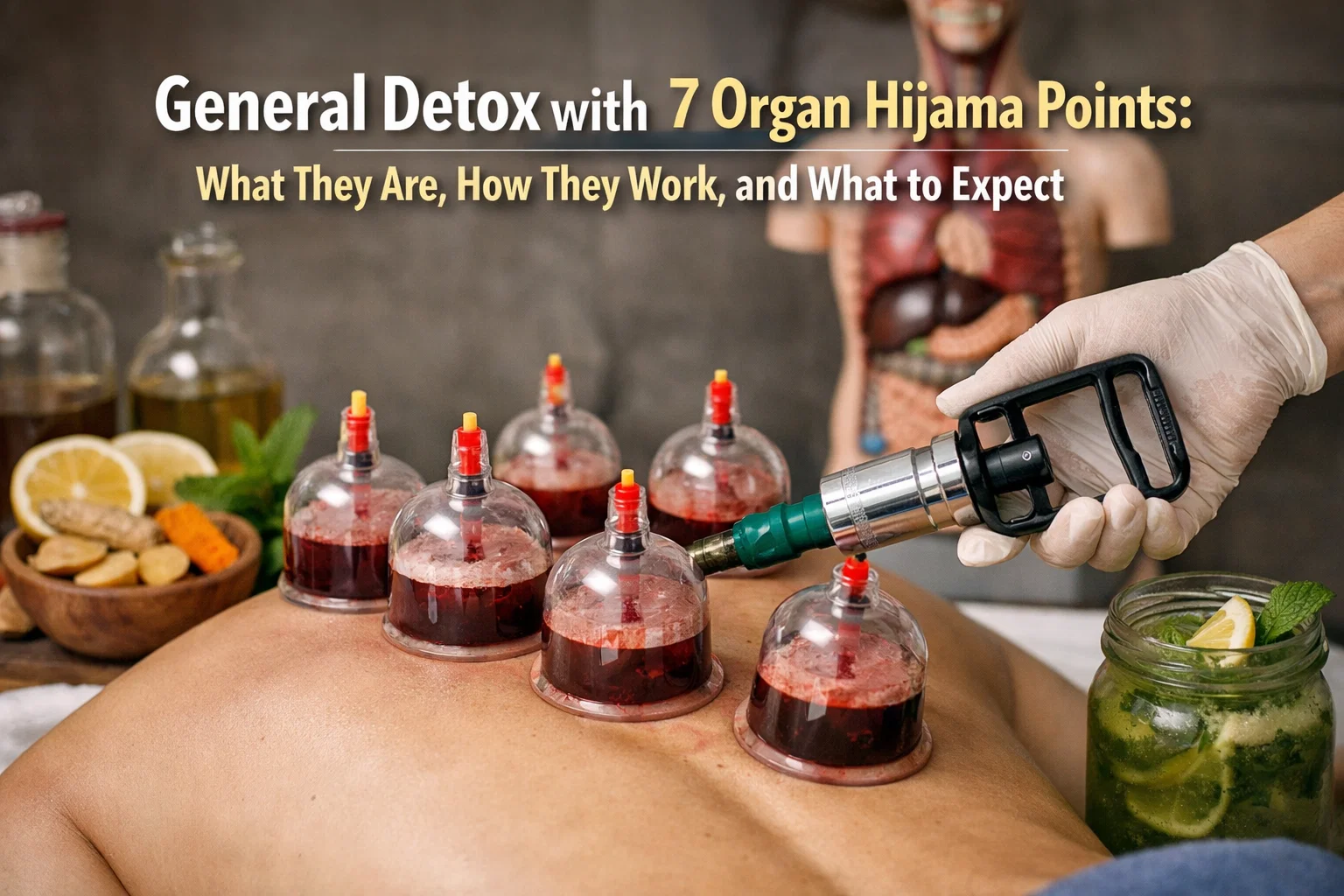
General Detox with 7 Organ Hijama Points: What They Are, How They Work, and What to Expect
You’ve tried sleeping more. You’ve cleaned up your diet. You’ve taken the supplements. But you still wake up feeling heavy, foggy, and tired for no clear reason. Your digestion is sluggish, your energy crashes by midday, and no doctor can quite explain it.
This is the picture I see in my clinic almost every week. And more often than not, what the body needs isn’t another supplement it needs a proper reset.
That’s where the 7-organ Hijama detox protocol comes in. When someone asks me for a full-body cleanse, these are the seven points I always start with. Together they access every major organ that carries toxic load: the liver, kidneys, heart, lungs, stomach, intestines, and reproductive system.
In this post, I’ll walk you through exactly where each point is, what it connects to, what you can realistically expect from it, and who should avoid this therapy.
| Ready to Book Your 7-Organ Detox Session? Serving Scarborough, Toronto & Ontario. Book online: hijamanaturalhealing.com/appointment-2 Call: (289) 242-7004 |

What Makes This a “Detox” Protocol?
The word “detox” gets thrown around a lot in wellness circles. So let me be specific about what I mean here.
Your body detoxes itself constantly — through the liver, kidneys, lymphatic system, skin, and gut. The problem is that when these systems get congested — from stress, poor diet, environmental pollutants, or poor sleep — they slow down. Waste accumulates. Blood circulation to the organs drops. You feel it.
Wet cupping (Hijama) works by creating a vacuum over specific points on the back, drawing stagnant blood to the surface. Once small, superficial incisions are made, that congested blood is drawn out. Fresh, oxygenated blood rushes in to replace it. The result is improved circulation to the organs connected to those points, reduced inflammation, and better lymphatic drainage.
This isn’t guesswork. A 2019 systematic review published in PLOS ONE found that wet cupping therapy had measurable effects on blood biomarkers associated with inflammation and oxidative stress. Practitioners across the world, and Islamic medicine for over 1,400 years, have mapped out which back points correspond to which organs — and which combinations produce the deepest full-body reset.
The 7 points below are that combination.
The 7 Organ Hijama Points: Locations at a Glance
Before getting into the benefits, here’s where each point sits on the body:
| Point | Location | Organ System |
|---|---|---|
| Point 1 | Base of neck, top of spine (Al-Kahil) | Brain, head, neck, upper spine |
| Points 4 & 5 | Upper back, T4–T6 level, either side of spine | Lungs, heart, thymus, upper back |
| Points 22 & 23 | Mid-back, L2–L3 level, over kidney region | Kidneys, adrenal glands, colon, small intestine |
| Points 24 & 25 | Lower back/pelvis, L5–S1 region (Al-Waraq) | Ovaries/testes, bladder, uterus, sciatic nerve, lower intestines |
These seven cups — one at the neck, two at the upper back, two at the mid-back, two at the lower back — cover the full length of the spine and access every major organ system in one session.
Benefits of 7 Organ Cupping Points
7 Organ Cupping Points therapy focuses on key areas of the body that are directly linked with vital organs, making it especially helpful for people who feel constantly tired, heavy, bloated, stressed, or out of balance without knowing why. By stimulating these specific points, cupping helps improve blood flow and oxygen delivery to organs like the liver, kidneys, heart, lungs, and stomach, allowing the body to release deep-stored toxins and built-up tension.
Many people notice relief from chronic body aches, digestive discomfort, poor sleep, hormonal imbalance, and mental fog after regular sessions because the therapy supports natural detox and restores organ communication. It is particularly valuable for those dealing with long-term stress, weak immunity, slow digestion, or unexplained fatigue, as it encourages the body to heal itself rather than just masking symptoms. Over time, 7 organ cupping points can help you feel lighter, more energetic, emotionally calmer, and better connected to your body’s natural rhythmsomething modern lifestyles often disrupt.
Point 1 — Al-Kahil (The Sunnah Point)

Location: The base of the neck, at the C7/T1 junction — that small bony bump you can feel when you tilt your chin down.
Organ connections: Brain, head, neck muscles, upper spinal cord, shoulders.
This is the most important Hijama point in traditional Islamic medicine. It’s called Al-Kahil, and in the prophetic tradition, it’s narrated that cupping at this point holds benefit for a remarkable range of conditions. In traditional Chinese medicine, this area is considered the convergence point of the blood — meaning it’s where blood toxicity and stagnation tend to accumulate most.
In my practice, almost every patient who comes in with chronic issues has significant congestion here.
What it helps with:
Headaches and migraines
Hijama at this point improves blood flow to the brain and relieves tension in the muscles connecting the neck to the skull. Patients with weekly migraines often see a dramatic reduction in frequency after 2–3 sessions.
Chronic cough and respiratory issues
The point is anatomically close to lung innervation pathways. Cupping here helps clear mucus congestion and reduce airway inflammation.
Asthma
By calming the nervous system and reducing bronchial inflammation, regular Hijama at Al-Kahil can support better breathing between episodes. (Note: this is complementary support, not a replacement for inhalers or prescribed treatment.)
Blood disorders
Practitioners across traditions consider this the primary point for addressing blood quality — whether that’s elevated toxin load, sluggish circulation, or signs of deficiency.
High blood pressure
By stimulating the parasympathetic nervous system and improving circulation, this point helps the body regulate vascular pressure more effectively.
Hair loss
Increased blood supply to the scalp and neck means more nutrients reaching the hair follicles. Patients dealing with stress-related hair thinning often notice improvement after consistent sessions.
Skin conditions (acne, eczema, psoriasis)
Blood detoxification at this central hub reduces the systemic inflammation that drives many chronic skin issues.
General fatigue and brain fog
This is the most common reason people book a session. Better cerebral circulation means clearer thinking, more energy, and better sleep quality within days.
Points 4 & 5 — Lung and Heart Points
Location: Upper thoracic area, around the T4–T6 vertebrae, one point on each side of the spine — roughly at the level of the shoulder blades.
Organ connections: Lungs, heart, thymus gland, upper back muscles.
Think of these two points as the chest’s pressure release valves. The shoulder blade area is where most people physically carry their stress — tight, knotted, sometimes burning. That tension isn’t just muscular. It’s the body’s physical response to emotional and physiological overload.
What they help with:
Chest congestion and lung function — Cupping at T4–T6 improves circulation to the lung parenchyma, helps clear mucus, and reduces inflammatory markers in the chest cavity. People dealing with frequent chest colds, post-COVID lung symptoms, or chronic bronchitis often benefit significantly.
Heart health and blood pressure — These points sit directly over the thoracic segments that share nerve supply with the heart. Hijama here reduces physical and emotional load on cardiac function and supports healthy vascular tone.
Thymus gland stimulation — The thymus sits just behind the sternum and is the primary organ for T-cell maturation — meaning it’s central to your immune response. Cupping in this zone is believed to stimulate lymphatic flow around the gland and support immune cell production.
Immune system support — Combined thymus and lymphatic stimulation makes points 4 and 5 one of the best combinations for people who get sick constantly or who are recovering from long-term illness.
Stress and fatigue — The upper back is the physical home of accumulated stress. Once the congestion here is cleared, most patients report an almost immediate sense of relief — not just physically but emotionally. The shoulders drop. The breathing deepens.
Shoulder and upper back pain — Reduced muscle tension, improved oxygen delivery, and cleared stagnant fluid in the soft tissue around the scapula gives lasting relief to people who’ve spent months trying stretches and painkillers.
Points 22 & 23 — Kidney and Adrenal Points
Location: Mid-back, around L2–L3 vertebrae, lateral to the spine — directly over the kidney region on each side.
Organ connections: Kidneys, adrenal glands, ureters, parts of the colon and small intestine.
Your kidneys filter about 200 litres of blood every single day. When kidney function is compromised — from dehydration, high salt intake, stress, or toxin overload — the effects ripple out everywhere: fatigue, fluid retention, hormonal disruption, lower back ache.
Points 22 and 23 are the most direct access points for kidney and adrenal support in the entire Hijama system.
What they help with:

- Kidney detoxification — Hijama at these points stimulates blood flow to and from the renal arteries, supporting the kidneys’ filtration capacity and helping clear accumulated metabolic waste.
- Adrenal fatigue and cortisol regulation — The adrenal glands sit right on top of the kidneys. Chronic stress burns through adrenal reserves, leaving people exhausted but wired, unable to sleep properly, and prone to inflammation. Cupping here helps restore adrenal rhythm.
- Lower back pain — These points overlay the lumbar muscles and kidney capsule. Clearing blood stagnation in this region gives relief to one of the most common complaints I see — chronic, nagging low back pain that hasn’t responded to physiotherapy or massage alone.
- Hormonal balance — The adrenals produce cortisol, aldosterone, and DHEA — hormones that affect everything from mood and energy to menstrual regularity and reproductive health. Hijama at 22 and 23 supports the gland’s ability to produce and regulate these hormones properly.
- Fluid retention and bloating — Poor kidney function leads to water retention in the legs, ankles, and abdomen. By improving renal circulation and filtration, Hijama here can reduce visible swelling within days of a session.
- Urinary issues — Frequent urination, difficulty urinating, or pain on urination often responds well to Hijama at these points, as the ureters and renal pelvis are directly in the treatment zone.
- Blood pressure regulation — The kidneys play a central role in blood pressure through the renin-angiotensin system. Supporting kidney circulation naturally supports healthier pressure levels.
Points 24 & 25 — Al-Waraq (Pelvic and Reproductive Points)
Location: Lower back and pelvic region, close to L5–S1, near the sacral dimples — one point on each side.
Organ connections: Ovaries (women) / testes (men), uterus, bladder, lower intestines, sciatic nerve, pelvic muscles and ligaments.
These two points — called Al-Waraq in the traditional texts — are the most versatile in the entire 7-point protocol. They access the lower third of the body: reproductive organs, the bladder, the bowel, and the largest nerve in the body, the sciatic nerve.
For women especially, these two points can be genuinely life-changing.
What they help with:

- Menstrual irregularities and painful periods — Hijama at Al-Waraq improves blood flow to the uterus and ovaries, reduces pelvic congestion, and supports hormonal signalling. Women with irregular cycles, severe cramping (dysmenorrhea), or PCOS frequently report meaningful improvement after a series of sessions.
- Menopause symptoms — Hot flashes, mood swings, sleep disruption, and fatigue associated with perimenopause and menopause can be eased by stimulating the ovarian reflex zones at these points and improving pelvic circulation.
- Sciatica — Points 24 and 25 sit directly over the course of the sciatic nerve. Reducing inflammation and stagnation in this area releases pressure on the nerve, providing relief from the radiating pain that travels from the lower back down through the leg.
- Bladder and urinary function — Close proximity to the bladder and ureters makes these points valuable for both urinary frequency and difficulty urinating.
- Digestive disorders — The lower intestines and colon are within the treatment zone. Constipation, gas, bloating, sluggish digestion, and irregular bowel movements all respond to the improved blood and nerve supply these points stimulate.
- Pelvic heaviness and lower abdominal pain — Conditions like endometriosis-related pelvic heaviness, post-surgical adhesion pain, or general pelvic congestion benefit from the lymphatic drainage and circulation improvement these points provide.
- Leg weakness and fatigue — Improved blood and nerve supply to the lower extremities means stronger legs, better circulation to the feet, and less heaviness after standing or walking for long periods.
Who Should NOT Have This Treatment
Hijama is safe for most healthy adults, but it’s not right for everyone. Please do not book a session if any of the following apply to you without first getting clearance from your doctor:
- You have a bleeding disorder (e.g., haemophilia, Von Willebrand disease)
- You are taking blood thinners (warfarin, aspirin therapy, newer anticoagulants)
- You are pregnant (particularly in the first trimester)
- You have active skin infections, open wounds, or inflamed skin over the treatment area
- You have severe anaemia
- You have had a recent surgery (within 6 weeks)
- You have uncontrolled diabetes with poor wound healing
- You are currently experiencing an acute fever or active infection
If you’re unsure, book a consultation first. We assess every new patient before recommending any protocol.
What to Expect During and After a Session
During the Hijama session:
You’ll lie face down. After cleaning and oiling the skin, cups are applied with gentle suction. You’ll feel pressure and warmth — not sharp pain. Once the skin is lifted, small superficial incisions are made and the cups reapplied to draw out the blood. The full 7-point session takes approximately 45–60 minutes.
After the Hijama session
This is where most people are surprised. Some feel deeply relaxed immediately. Others feel a wave of tiredness — that’s normal. The body is doing significant internal work in the hours after Hijama.
For the first 24 hours after your session:
Most people notice a real shift in energy, mental clarity, and digestive comfort within 2–3 days.
- Drink plenty of water (this is non-negotiable — your kidneys need it)
- Eat light, warm, nourishing food
- Avoid cold water, swimming, and cold air on the treated area
- Rest if your body asks for it
- Avoid strenuous exercise

How Often Should You Get the 7-Point Detox?
For general wellness and seasonal detox, once every 3–4 months is the traditional recommendation and aligns well with what I observe clinically.
For those dealing with chronic conditions — hormonal imbalance, persistent fatigue, ongoing digestive issues — a series of monthly sessions for 3 months often produces the most significant results, after which you can drop to a maintenance schedule.
The Sunnah recommendation is to perform Hijama on the 17th, 19th, or 21st of the lunar (Hijri) month — dates that many of my patients follow and report good outcomes from.
Frequently Asked Questions
Is Hijama painful?
The cupping suction feels like firm pressure. The incisions are superficial — most people describe a slight scratch. The relief afterward is far more noticeable than any discomfort during the session.
How long do the marks last?
The circular marks are not bruises — they result from suction drawing blood to the surface. They typically fade within 3–7 days depending on circulation and skin tone.
Can I have Hijama during my period?
Most practitioners recommend waiting until your period has ended. The body is already releasing during menstruation — adding a detox session can be too much for some people. Book around day 7–10 of your cycle for best results.
Is Hijama halal?
Yes. Wet cupping (Hijama) is a Sunnah of the Prophet Muhammad (PBUH) and is considered not only permissible but actively recommended in Islamic tradition.
I have never had Hijama before. Should I start with all 7 points?
If you are new to the therapy, your practitioner may start with fewer points and assess your body’s response before moving to the full 7-point protocol. Communicate openly during your initial consultation.
How is wet cupping different from dry cupping?
Dry cupping uses suction only — no incisions. Wet cupping (Hijama) involves small incisions to draw out stagnant blood. Both have benefits, but the 7-organ detox protocol specifically uses wet cupping for deeper organ-level results.
For more answers: Visit our full FAQs page
References and Further Reading
WHO Traditional Medicine Strategy 2014–2023
Al-Bedah et al. (2019). The mechanism of wet cupping. PLOS ONE.
British Cupping Society — What is cupping therapy?
PubMed search: cupping therapy clinical trials
Ready to Book Your Detox Session?
If you’re in the Scarborough, Toronto, or wider Ontario area and want to try the 7-organ Hijama detox, we’d love to see you.
Or call us directly: (289) 242-7004
Every session is conducted by a certified practitioner in a clean, professional environment. We take your intake form seriously — if anything in your health history gives us pause, we’ll tell you honestly before we begin.
Hijama Natural Healing | 4301 Kingston Road, Scarborough, Ontario, Canada
Leave a Reply