
No products in the cart.
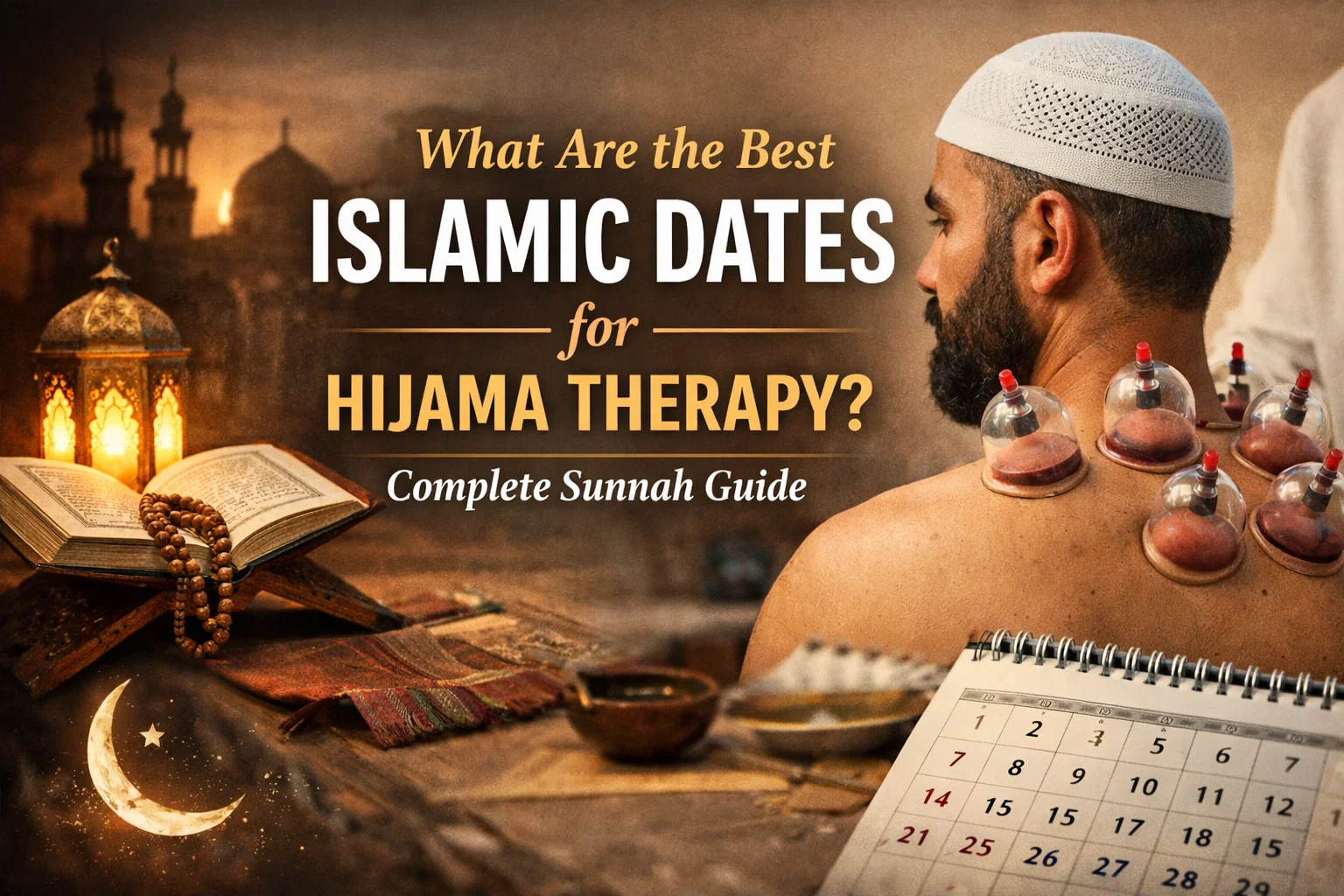
What Are the Best Islamic Dates for Hijama Therapy? Complete Sunnah Guide
Hijama (cupping therapy) is not just a method of treatment—it is a Sunnah of the Prophet Muhammad (PBUH) and a deeply rooted part of Tibb-e-Nabawi (Prophetic Medicine). Many people ask: What are the best Islamic dates for Hijama?
The answer lies in authentic Hadith, scholarly understanding, and centuries of practice. This guide explains everything clearly—Sunnah dates, wisdom behind them, and how to follow Hijama correctly according to Islam.
What Is Hijama in Islam?
Hijama is a method of removing stagnant or harmful blood from the body using suction cups. It was practiced and recommended by the Prophet ﷺ as a powerful natural remedy.
The Messenger of Allah ﷺ said:
“The best of treatments you have is Hijama.” (Sahih al-Bukhari)
This shows Hijama is not just cultural—it is divinely guided healing.
Best Islamic Dates for Hijama (According to Sunnah)
The most authentic and widely accepted Sunnah dates for Hijama are:
- 17th of the Islamic (lunar) month
- 19th of the Islamic month
- 21st of the Islamic month
These dates are based on multiple narrations where the Prophet ﷺ preferred and recommended Hijama on these specific days.

Why These Dates?
Islamic scholars explain that these days fall in the second half of the lunar cycle, when:
- Blood circulation is more active
- Impurities are more likely to surface
- The body is more responsive to cleansing
This reflects the balance between divine wisdom and natural body rhythms.
Hadith Evidence for Sunnah Dates
عدة authentic narrations mention these dates:
- The Prophet ﷺ said:
“Whoever performs Hijama on the 17th, 19th, or 21st, it will be a cure for every disease.” (Reported in Sunan Abu Dawood) - Ibn Abbas (RA) reported that the Prophet ﷺ preferred these days for cupping.
These Hadith form the foundation of the Sunnah Hijama schedule followed today.
Are There Other Recommended Islamic Days?
Yes, some scholars also mention:
Ayyam al-Beedh (White Days)
- 13th, 14th, and 15th of the lunar month
These are spiritually significant days (often used for fasting), and some practitioners consider them beneficial for Hijama as well.
General Rule in Islam
Hijama can be performed anytime if needed, especially for illness. However:
- Sunnah days = better and more rewarding
- Other days = permissible when necessary
Days to Avoid for Hijama (According to Some Scholars)
Certain narrations (though debated in authenticity) mention avoiding:
- Wednesday
- Friday
- Saturday
Because of varying authenticity, scholars advise:
- Do not treat these as strictly forbidden
- Follow Sunnah dates when possible
- Prioritize health needs over delay
Best Time of Day for Hijama
Islamic tradition and practitioner experience suggest:
- Morning (before eating heavily) is الأفضل
- Light fasting state is recommended
- Avoid immediately after heavy meals
This supports better blood flow and cleansing.
Spiritual Etiquettes of Hijama
1. Make Intention (Niyyah)
Do Hijama with the intention of:
- Seeking healing from Allah
- Following the Sunnah
2. Trust in Allah (Tawakkul)
Hijama is a means—not the cure itself.
Shifa (healing) comes only from Allah.
3. Maintain Cleanliness
Islam emphasizes hygiene in all treatments.
4. Avoid Showing Off
Hijama is عبادت (an act of worship when done with intention), not a trend.
Physical Benefits of Hijama
While modern science supports Hijama, Islam already highlighted its benefits:
- Removes harmful or stagnant blood
- Relieves headaches and body pain
- Supports overall الجسم (body balance)
- Acts as preventive care, not just treatment
The Prophet ﷺ used Hijama for:
- Head pain
- Injury recovery
- General health maintenance
How Often Should You Do Hijama?
Based on traditional practice:
- Once a month (on Sunnah dates) for maintenance
- Every 2–3 months for general health
- As needed for specific conditions
Consistency matters more than frequency.
Common Mistakes to Avoid
Many people unknowingly do this wrong:
- Ignoring Sunnah dates completely
- Doing Hijama without intention
- Going to untrained practitioners
- Overdoing sessions unnecessarily
- Treating it as a trend instead of Sunnah
Correct approach = Balance + Sunnah + Knowledge
Frequently Asked Questions
Can Hijama be done without Sunnah dates?
Yes, especially for illness. But Sunnah dates are افضل (better).
Is Hijama necessary for everyone?
No, but it is highly beneficial as preventive care.
Does Hijama hurt?
Mild discomfort only. Most people feel relief afterward.
Is fasting required before Hijama?
Not required, but a light stomach is recommended.
Final Thoughts: Follow the Sunnah with Understanding
The best Islamic dates for Hijama—17th, 19th, and 21st—are not random. They reflect a perfect balance of:
- Prophetic guidance
- Natural body cycles
- Spiritual discipline
Hijama becomes powerful when it is done with:
- Correct timing
- Proper intention
- Trust in Allah
This transforms it from a simple therapy into a complete healing system for body and soul.



Leave a Reply