
No products in the cart.
The Prophet (PBUH) said: In Hijama, there is a cure.
Hijama for Seniors
Hijama for Seniors & Cupping Therapy for Elderly
Hijama for Seniors in Toronto a Gentle, Adapted Cupping Therapy for Older Adults
Hijama for seniors is increasingly used as a supportive natural therapy for age-related discomfort, chronic pain, and reduced mobility. As the body ages, circulation slows, inflammation increases, and healing becomes less efficient. These changes often lead to joint stiffness, persistent back pain, fatigue, and sleep disturbances. Cupping therapy for elderly patients is designed to address these underlying imbalances through a traditional, non-pharmaceutical approach.
What is Hijama Therapy for Seniors?
Growing older does not mean living in pain. Yet for millions of Canadian seniors, chronic joint pain, stiff muscles, poor circulation, disrupted sleep, and persistent fatigue have quietly become part of daily life managed at best with medications that carry their own costs and side effects.
Hijama therapy for seniors offers something different: a natural, hands-on, drug-free treatment that works with the body’s own healing systems not around them.
At Hijama Natural Healing in Scarborough, our certified practitioner Rabia Anjum has developed a gentle, modified protocol specifically designed for older adults. Lighter suction levels, careful cup placement, shorter session durations, and a thorough pre-treatment health review ensure that every senior client receives treatment that is safe, comfortable, and clinically appropriate for their age, health history, and specific conditions.
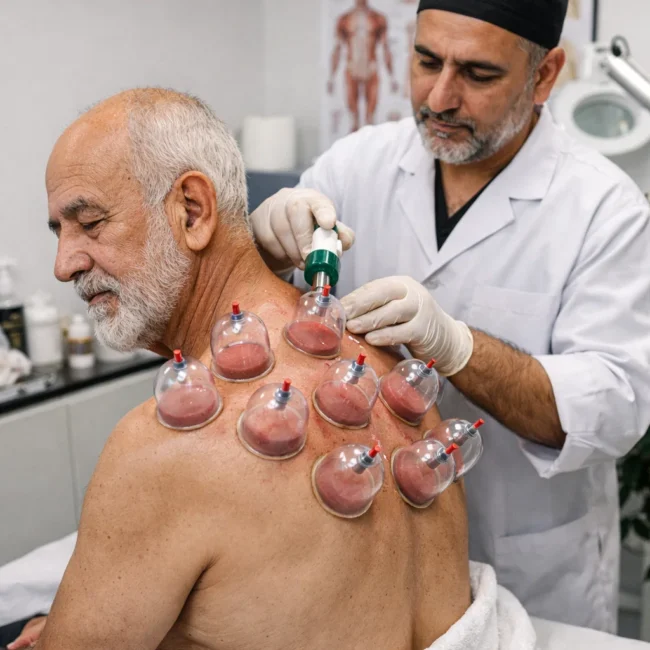
Why Seniors Experience More Pain and Stiffness
With aging, the body naturally undergoes structural and functional changes. Blood circulation slows down, muscles lose flexibility, and joints begin to accumulate stiffness due to reduced lubrication and increased inflammation. These changes are often experienced as knee pain, shoulder stiffness, lower back discomfort, and difficulty in movement.
Many elderly individuals also experience chronic fatigue. When oxygen supply becomes less efficient, the body feels heavier and less energetic. Sleep quality is also affected because physical discomfort prevents deep relaxation.
Cupping therapy for seniors is applied to address these underlying issues by improving circulation and reducing internal stagnation.
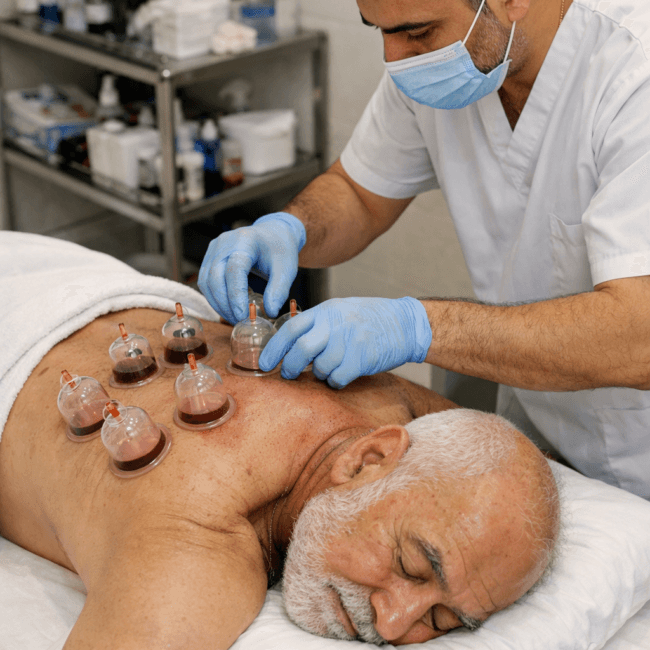
Is Hijama a Replacement for Medical Treatment?
Hijama should be understood as a supportive wellness therapy, not a substitute for essential medical treatment. In modern healthcare terms, it falls under complementary and alternative medicine (CAM), meaning it can be used alongside prescribed medical care but not instead of it.
For seniors, this distinction is especially important because age-related conditions often require ongoing medical supervision. Hijama may help support general wellbeing, but conditions like diabetes, high blood pressure, heart disease, and arthritis still need regular clinical treatment and monitoring.
In fact, many people search for terms like “is cupping therapy safe for elderly diabetics” or “Hijama for high blood pressure patients over 60” and the key answer is always the same: it depends on the individual’s health stability and doctor’s approval.
A safer and more effective approach for older adults is an integrated care plan, where Hijama is used as a supportive therapy to potentially improve circulation, reduce muscular tension, and promote relaxation, while medical treatment continues as the primary line of care.
When both systems work together modern medicine for disease management and Hijama for physical balance and recovery support many seniors report better comfort, improved mobility, and enhanced overall quality of life.
Still, professional evaluation is essential before starting, especially for those on long-term medication or managing multiple chronic condition
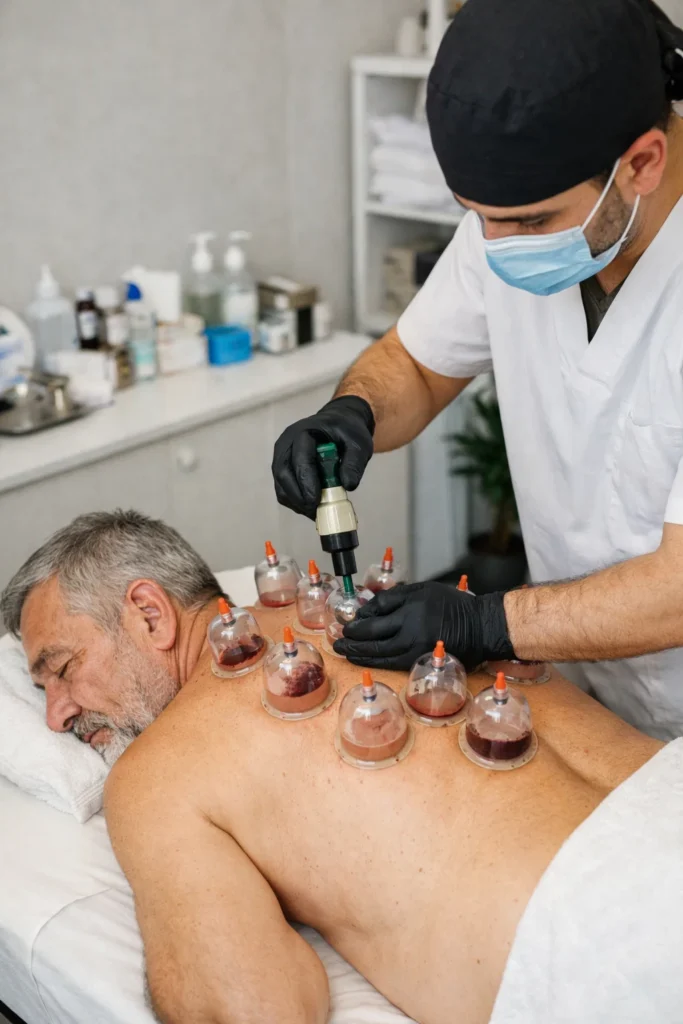
What Conditions Does Hijama Address in Older Adults?
Hijama for seniors at Hijama Natural Healing is designed to address the most common health challenges that older Canadians face approached from a root-cause, whole-body perspective rather than symptom suppression alone.
Arthritis and Chronic Joint Pain
Arthritis sessions use gentle suction at periarticular points (around the joint) and along corresponding spinal segments improving synovial blood supply, reducing inflammatory cytokine burden in joint tissue, and easing the persistent ache that defines daily life with arthritis.
Lower Back Pain and Spinal
Back pain is the second most common reason seniors present at our Scarborough clinic. Years of postural strain, degenerative disc changes, facet joint arthritis, and paraspinal muscle tension accumulate into chronic discomfort that most medications can only partially manage.
Poor Circulation and Support
Reduced peripheral circulation is one of the most universal features of biological ageing. Cold hands and feet, leg heaviness, slow wound healing, and persistent fatigue often trace back to the same root: blood moving less efficiently through peripheral tissues.
Sleep Disruption and Fatigue
50% of adults over 65 report chronic sleep difficulties a figure that rises with the presence of chronic pain. Sleep deprivation in seniors is not merely a comfort issue: it is linked to accelerated cognitive decline, increased inflammation, and higher fall risk.
Muscle Stiffness and Reduced Mobility
The progressive loss of muscle pliability and fascial suppleness that comes with ageing is not purely structural it is also vascular. Muscles and connective tissue that receive reduced blood flow become stiffer, more painful, and slower to recover from use.
Immune Resilience and Illness Recovery
The natural decline in immune function with age leaves seniors more vulnerable to recurrent infections, slower recovery, and prolonged inflammation. Regular Hijama sessions every 6 to 8 weeks for older adults provide consistent immune support
Hijama Natural
What the Research Says for Cupping Therapy for Older Adult
We believe in being honest about what the science currently shows clearly, accurately, and without overstating the evidence.
The following is a summary of the most relevant peer-reviewed research on cupping therapy for the conditions most commonly presented by senior clients:
Condition | Study / Source | Finding |
|---|---|---|
| Chronic pain | PMC11955767 (2025 meta-analysis, NCBI) | Cupping showed significant VAS pain reduction vs. no treatment (MD –1.75 cm). Benefit in pain intensity, quality of life, and sleep. |
| Low back pain | Zhang et al. 2024 (PubMed 38184285) | High-to-moderate quality evidence: cupping significantly improves pain and disability, outperforming medication and usual care. |
Knee osteoarthritis | PMC3853699 (JTCM) | Cupping results comparable to acetaminophen 650mg for pain/inflammation, with fewer adverse effects. |
| Neck pain | Kim et al. 2011 (Evid-Based Complement. | Cupping effective for chronic neck pain in systematic review of RCTs. Alternat. Med.) |
| Blood pressure | ResearchGate (2022, elderly cohort) | Significant reduction in systolic blood pressure (5.1mmHg avg.) in elderly patients post-cupping. |
| General pain | Frontiers in Neurology (Wang et al. 2023) | Evidence-mapping across 14 meta-analyses: moderate-quality support for cupping in chronic back pain, knee OA, neck pain. |
Important clinical note: Most cupping research involves general adult populations. Research specifically in elderly cohorts is limited, and the overall evidence base for cupping still carries methodological limitations acknowledged by researchers. Hijama is a complementary therapy it works best alongside, not as a replacement for, appropriate medical care. Rabia will advise honestly on whether Hijama is appropriate for your specific situation.
Is cupping therapy new age?
Cupping therapy is not a new-age treatment; it is one of the oldest recorded therapeutic practices in traditional medicine systems. It has been used for centuries across different cultures for pain relief, detoxification, and general wellness support.
What is considered “modern” is not the therapy itself but the way it is now being studied, standardized, and applied in clinical environments. Today, cupping is often combined with modern hygiene standards, better assessment methods, and improved understanding of body physiology.
In current wellness practice, cupping therapy for seniors is being reintroduced as a complementary approach to support chronic pain conditions, especially where long-term medication use is not ideal. This combination of traditional method and modern safety protocols is what makes it relevant in today’s healthcare landscape rather than a completely new invention.
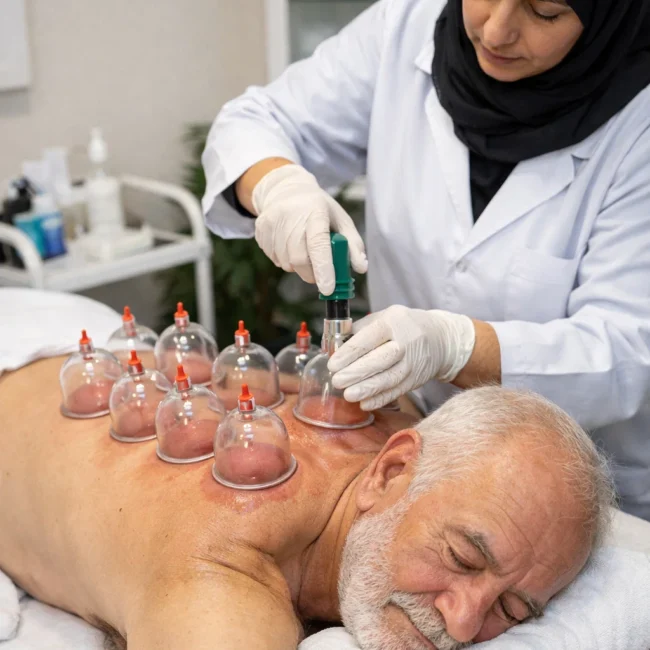
What to Expect at Your Senior Hijama Session in Scarborough
Before Your Session
Eat a light meal 1–2 hours before your appointment not a heavy meal, not fasting. Stay well hydrated. Bring a list of your current medications if possible. Wear comfortable, loose clothing that allows access to your upper back and shoulders without needing to remove more than is comfortable for you.
During Your Session
You will be asked to sit or lie comfortably in whichever position is easiest for your joints and mobility. Rabia begins with a warm-up conversation to confirm your comfort and finalise point selection. Cups are applied gently. The sensation is a mild to moderate pulling pressure most senior clients are surprised by how gentle and comfortable it is. Sessions typically run 40 to 50 minutes for older adults (shorter than the standard 60-minute session).
After Your Session
You may feel immediately lighter, calmer, and more relaxed. Some clients feel briefly tired this is normal and is the body entering active recovery mode. Drink at least 1.5–2 litres of water over the following 24 hours. Rest. Avoid hot baths, saunas, or strenuous activity for 24 hours. Keep the treated areas dry and warm.
Cupping marks circular discolourations ranging from light pink to deep red are normal and not painful. In senior skin they may be more pronounced and can take 5–10 days to fully fade.
| Goal | Initial Phase | Maintenance |
|---|---|---|
| Chronic joint pain / arthritis | Every 3–4 weeks × 4 sessions | Monthly |
| Back pain management | Every 2–3 weeks × 4 sessions | Every 4–6 weeks |
| Circulation and immune support | Every 4 weeks × 3 sessions | Every 6–8 weeks |
| Sleep and stress management | Every 4 weeks × 3 sessions | Every 6–8 weeks |
| General Sunnah wellness | — | Every 2–3 months |
Your personalised plan will be discussed and agreed upon during your first consultation.
Why Seniors Across the GTA Choose Hijama Natural Healing in Scarborough
A Named, Credentialed Practitioner You Can Trust
Rabia Anjum holds dual professional certification:
- Hijama Nation Academy (HNA) — one of North America’s most recognised Hijama training bodies
- International Practitioners of Holistic Medicine (IPHM) — an internationally recognised complementary medicine licensing body
Her credentials are documented, verifiable, and linked from our About page. When searching for cupping therapy for elderly parents or a senior family member, practitioner credentials are the most important factor in safety. [Link: About Rabia Anjum →]
Adapted Protocols, Not a Template
Every senior client receives a fully individual assessment before treatment begins. No two people of any age have the same health picture, and this is especially true for older adults managing multiple conditions and medications simultaneously.
Medical-Grade Hygiene, Non-Negotiable
Every session uses single-use, individually sealed sterile blades and cups opened in front of you and disposed of immediately after. Our clinic is cleaned and disinfected between every client. For elderly clients with potentially compromised skin integrity, this level of hygiene is not optional it is the baseline.
Honest Guidance, We Tell You If Hijama Is Not Right for You
If your medication history, current health status, or specific conditions mean Hijama is not appropriate, Rabia will tell you honestly and suggest the most appropriate referral. We will never treat someone for whom treatment is not safe or appropriate.
Accessible Location for Seniors Across the GTA
📍 4301 Kingston Road, Scarborough, Ontario Accessible from Toronto, Markham, Pickering, Ajax, Mississauga, and Brampton. Free parking available. Ground-floor access. Flexible appointment scheduling including daytime weekday slots preferred by seniors.
Is Hijama Safe for seniors adults?
This is one of the most important questions senior clients and their families ask and it deserves an honest, detailed answer. When performed by a certified practitioner using sterile equipment, appropriate suction levels, and adapted protocols, Hijama cupping therapy is generally safe for older adults. However, there are specific situations where Hijama is not appropriate, or where physician consultation is required before proceeding.
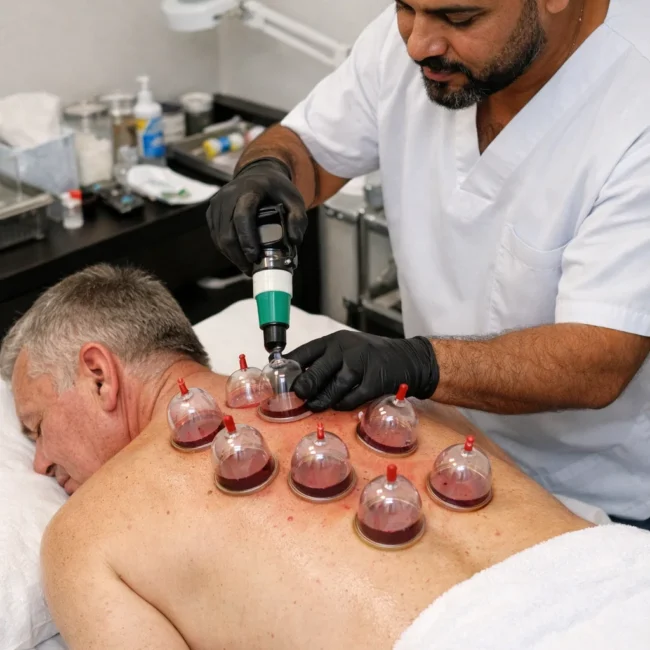
What is the age limit for cupping?
There is no fixed universal age limit for cupping therapy because suitability depends more on a person’s health condition than their exact age. Cupping therapy can be performed on adults of different age groups, including older individuals, as long as the body is strong enough to tolerate mild suction and the skin condition is suitable for treatment.
In elderly care, the focus shifts from age to physical strength, circulation level, skin sensitivity, and existing medical conditions. Seniors who are generally stable and not suffering from severe weakness or uncontrolled illnesses may still receive cupping therapy, but the intensity is always reduced. Gentle techniques are used to ensure that the body is not stressed during the process. This makes hijama for seniors a flexible therapy that is adapted rather than restricted by age alone.
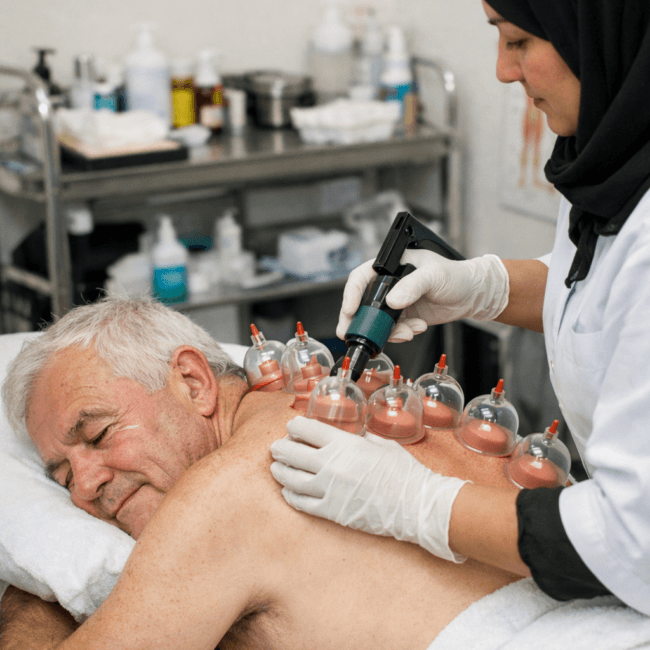

Who should avoid Hijama?
Hijama is not suitable for everyone, especially when certain health risks are present. Individuals with severe anemia should avoid this therapy because the body may already be lacking sufficient blood volume or strength. In such cases, removing additional blood can create imbalance.
People with uncontrolled bleeding disorders or those taking strong blood-thinning medication also need to avoid hijama unless a medical professional gives clearance. Extremely weak patients, or those recovering from major illness or surgery, are generally advised to postpone treatment until the body regains stability.
Elderly individuals with advanced heart conditions or unstable blood pressure should undergo careful evaluation before considering hijama therapy. The key principle is that the body must be stable enough to handle mild detoxification and circulation stimulation.
Frequently Asked Questions — Hijama for Seniors in Toronto
Generally, yes when performed by a certified practitioner with a proper health intake process and adapted protocol. The key requirements are: verified credentials, thorough pre-treatment assessment including medication review, sterile equipment, and modified suction levels appropriate for older skin. Contraindications exist (see above) and must be assessed individually before every session.
Controlled hypertension managed with blood pressure medication is generally not a contraindication for dry cupping. For wet Hijama, Rabia will review your specific medication and dosage. Blood thinners such as warfarin or rivaroxaban do require physician clearance before wet cupping please inform us when booking.
Most senior clients are surprised by how gentle the experience is. The sensation is a mild pulling or warmth similar to a firm massage. Our adapted senior protocol uses lighter suction than standard adult treatments. The incisions in wet Hijama are extremely superficial (less than 1mm) and brief. The overall session is typically described as deeply relaxing. If at any point you feel uncomfortable, simply tell Rabia and the session will be paused or modified.
Mild-to-moderate osteoporosis is not an automatic contraindication. However, Rabia will carefully assess the bones and areas involved and will avoid direct cupping over areas of known fragility or recent fracture. Dry cupping on surrounding muscle tissue can still be therapeutic without placing cups directly over fragile bone structures.
Yes. Our senior clients come independently as well as accompanied by family members. We welcome family members sitting in during the consultation and session if the client prefers company. Rabia will speak directly with your parent to ensure full informed consent and comfort throughout.
Many senior clients notice improvement within 24–72 hours of their first session particularly in sleep quality, physical lightness, and reduced morning stiffness. For chronic conditions like arthritis and long-standing back pain, meaningful and sustained improvement typically builds across three to six sessions. Rabia will provide an honest assessment at your first consultation.
Book a Senior Hijama Consultation in Scarborough Today
Chronic joint pain, poor sleep, and persistent fatigue are not inevitable consequences of ageing. They are physiological conditions and Hijama offers a direct, evidence-informed, and compassionate natural approach to addressing them. At Hijama Natural Healing, we take the time to understand your health history, adapt every session to your individual needs, and ensure that every older adult who walks through our doors leaves feeling genuinely cared for not processed. Whether you are 60, 70, or 80, it is not too late to invest in the quality of how you feel each day. We serve clients from across Toronto, Scarborough, Markham, Pickering, Ajax, Mississauga, Brampton, and the broader GTA. Free parking. Accessible ground-floor clinic. Daytime weekday appointments available.