No products in the cart.
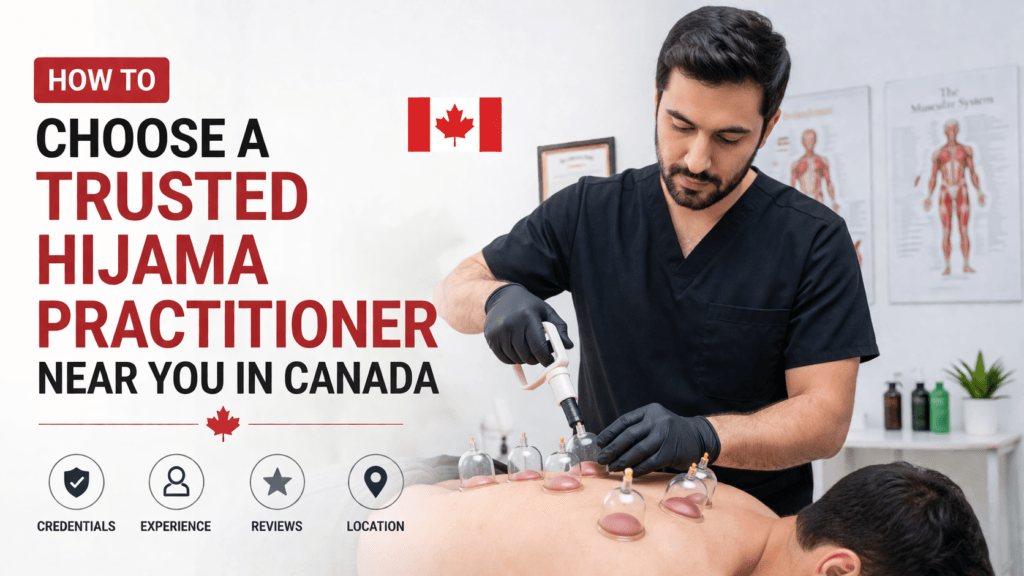
I get this question almost every week from people across Scarborough, Toronto, and the wider GTA: “Rabia, how do I know if a Hijama practitioner is actually safe and qualified?” It breaks my heart when clients come to me after a bad experience cups placed by someone working out of a garage, no health consultation, no gloves, no aftercare guidance. It happens more than you’d think.
That’s why I wrote this guide. Not as a generic checklist, but as something real the kind of advice I give my own family. After 14+ years in healthcare and years of practicing Hijama right here in Scarborough, I can walk you through exactly what to look for, what to avoid, and how to find someone you can genuinely trust.
1. What Is Hijama and Why Are So Many Canadians Seeking It?
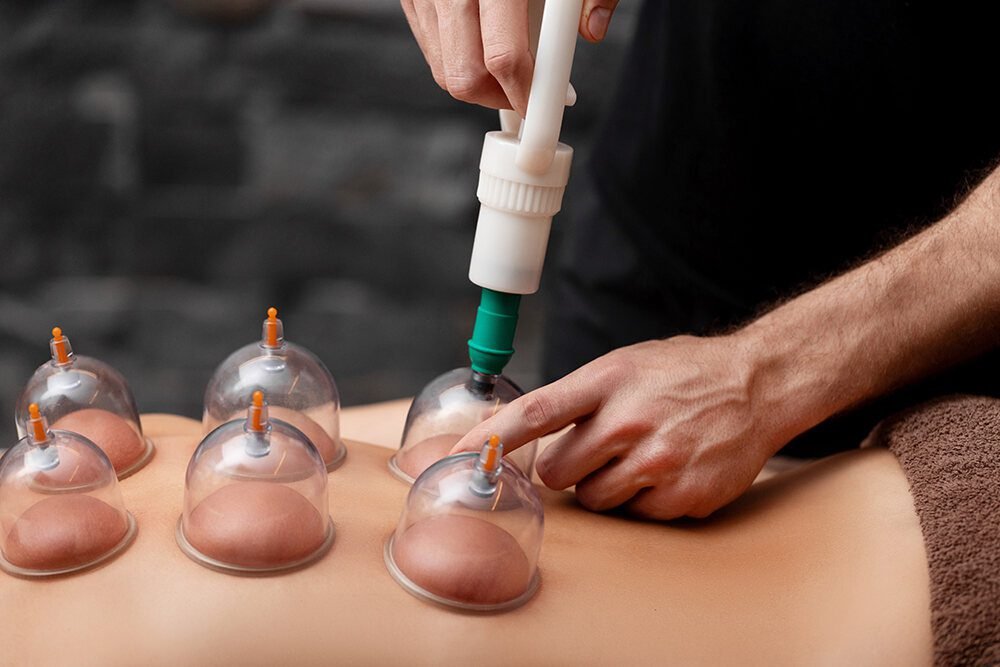
Hijama from the Arabic hajm, meaning “to restore to its natural state” is wet cupping therapy. It combines suction cups placed on the skin with small, superficial incisions that allow stagnant blood and toxins to be drawn out naturally.
It is one of the most beloved practices in Islamic medicine. The Prophet Muhammad ﷺ said:
“The best of treatments you use is cupping.” Sahih Al-Bukhari 5371
But Hijama is not just a spiritual practice. It is increasingly being recognized for measurable physical benefits: improved circulation, pain relief, hormonal support, and deep detoxification. And here in Canada especially in cities like Scarborough, Brampton, Mississauga, and Toronto demand is growing fast.
Our clients at Hijama Natural Healing in Scarborough come from all walks of life. Some are reviving a Sunnah. Some are looking for natural alternatives to medication. Some are athletes seeking faster recovery. And increasingly, many are women who have been let down by conventional approaches and are ready to try something that genuinely addresses the root cause.
Whatever brings you here you deserve to choose a practitioner with confidence.
2. Is Hijama Legal in Canada?
This is one of the most important questions and one of the most misunderstood. So let me be straightforward.
Yes, Hijama can be legally practiced in Canada. But the rules vary by province, and they matter enormously.
Ontario:Where Hijama Natural Healing Operates
In Ontario, wet cupping (Hijama) is permitted under the complementary and alternative health framework. A practitioner who is properly trained, certified by a recognized body, and operating within defined scope of practice can legally offer Hijama. Practitioners affiliated with the Professional Wellness Alliance (PWA) and IPHM (International Practitioners of Holistic Medicine) are operating within a recognized and insured framework.
What is illegal and genuinely dangerous is someone performing wet cupping with no training, no sanitation infrastructure, and no credentials, and calling it “Hijama.” Under Health Canada guidelines, practitioners not registered with any recognized regulatory body can face fines of up to $25,000.
At Hijama Natural Healing, we are certified through Hijama Nation Academy (HNA) one of the world’s leading Hijama training bodies and licensed with IPHM, giving our clients assurance that what happens in our clinic is professional, ethical, and legally sound.
Other Provinces
- Alberta — Relatively accessible for holistic practitioners; some Calgary clinics offer direct extended health billing
- BC, Quebec, Manitoba — Varying frameworks; the onus on vetting falls more on you as the client
- Atlantic Canada — Less regulated; word-of-mouth from trusted community networks is essential
The bottom line: Always ask your practitioner how they are legally authorized to perform Hijama in your province. Anyone trustworthy will answer without hesitation.
3. Ten Things That Separate a Trusted Hijama Practitioner From the Rest
After years of practice and conversation with hundreds of clients, I can tell you that these ten things are what truly matter.
1. Verifiable Certification From a Recognized Body
This is the foundation. Before anyone places a cup on your skin, you should be able to verify where they trained and who certified them.
In Canada, look for certification from:
- Hijama Nation Academy (HNA) — UK-based, globally recognized, operating in USA, Canada, and Australia
- IPHM (International Practitioners of Holistic Medicine) — internationally accredited
- GRCCT (General Regulatory Council for Complementary Therapies) — UK-based, with practitioners registered across Canada
- Professional Wellness Alliance (PWA) — North American body covering holistic health practitioners
Real certification is not a one-day printout. It involves anatomy, health screening protocols, hygiene standards, practical case studies, and ongoing professional development. Ask to see the certificate and look up the certifying body online.
At Hijama Natural Healing, both our HNA certification and IPHM licensing are verifiable and available to clients on request.
2. Liability Insurance
This is non-negotiable. A professional Hijama practitioner in Canada must carry liability insurance. This protects you in the rare event that something goes wrong. Ask directly: “Are you insured to practice Hijama?”
If the answer is anything other than a clear yes walk away.
3. Clinical Hygiene You Can See
Hijama involves breaking the skin. The infection risk from improper hygiene is serious and real. Before booking, ask or visit to confirm:
- Disposable, single-use cups — never reused between clients
- Sterile, single-use lancets or surgical blades — opened fresh in front of you
- Gloves worn throughout the procedure
- Clinical-grade waste disposal for bloodied materials
- Clean, purpose-built treatment space — not a living room
This is something we take seriously at our Scarborough clinic. Every session uses brand-new disposable equipment and the treatment room meets clinical hygiene standards. Clients often comment on it in their reviews and that’s exactly as it should be.
4. A Proper Health Consultation Before You Begin
A qualified practitioner does not pick up cups the moment you walk in. Before your first session, you should be asked about:
- Your current medications (especially blood thinners like Warfarin or Aspirin)
- Existing medical conditions
- Pregnancy or plans to conceive
- Recent surgeries, wounds, or skin conditions
- Whether you are fasting and for how long
If someone is ready to start without asking a single health question leave.
5. Knowledge of Contraindications
A trained practitioner knows Hijama is not for everyone. Clear contraindications include:
- Pregnant women
- People with hemophilia or clotting disorders
- Those on blood-thinning medications
- Active skin infections or open wounds in the treatment area
- Severe anemia
- Certain cancer treatments
We explore this in detail in our guide: Hijama for Women in Canada — What You Need to Know. Anyone who tells you “Hijama is safe for absolutely everyone” is not being honest with you.
6. Sunnah Authenticity For Those Who Want It
For Muslim clients, the spiritual dimension of Hijama is not optional. A practitioner who understands Sunnah Hijama will:
- Know the recommended Islamic lunar calendar dates (17th, 19th, and 21st of the Islamic month) read more on our Sunnah Days page
- Begin sessions with Bismillah and appropriate intention
- Respect gender boundaries female clients should always have access to a qualified female practitioner
- Understand the prophetic wisdom behind specific cupping points
Our practitioner Rabia Anjum specifically specializes in Hijama for women in Canada and has served the Muslim community of Scarborough and the GTA for years with this commitment at the center of her practice.
7. Transparent, Honest Pricing
Hijama in Canada typically ranges from $70–$200 CAD per session, depending on the type and scope of treatment. At Hijama Natural Healing, our pricing is fully transparent:
- Dry Cupping — $70
- Wet Cupping (General Detox) — $100
- Wet Cupping (Full Body Detox) — $200
- Moving Cupping — $80
- Facial Cupping — $140
- Head Cupping — $70
There are no hidden fees and no high-pressure upselling into packages you haven’t agreed to. Book your appointment here.
8. Real Reviews From Real People in Your Community
Word of mouth matters especially in communities where trust is personal. Look for:
- Consistent 4.9–5 star Google ratings with specific, detailed reviews
- Reviews that mention hygiene, professionalism, aftercare, and actual health outcomes
- Long-standing presence in the local community
At Hijama Natural Healing, we are proud of our 68 verified Google reviews and what stands out is how often clients mention pain relief (back pain, migraines, sciatica), the calm clinical environment, and Rabia’s patience in answering questions. These are the things that matter.
9. Clear Aftercare Instructions
A Hijama session doesn’t end when you leave the clinic. Your practitioner should give you:
- Guidance on hydration (read: Why Hydration Is the Hidden Key to Safe Hijama)
- What to eat and avoid in the first 24 hours
- How to care for the treatment area
- What the marks mean and how long they last
- Signs that would warrant contacting your practitioner or a doctor
Poor aftercare guidance is one of the clearest signs of inadequate training. We provide written aftercare to every client.
10. They Will Refer You to a Doctor When Needed
A practitioner who is truly skilled and ethical does not position Hijama as a cure-all or a replacement for medical diagnosis. If your symptoms suggest something requiring a physician’s evaluation, we say so clearly. That honesty is a mark of real clinical integrity.
4. Red Flags: Walk Away If You See Any of These
Let me be direct with you. These are warning signs that a practitioner could put your health at risk:
- No verifiable certification — cannot name their training body or show credentials
- Working from home with no clinical setup — particularly concerning given infection and waste disposal requirements
- Reusing cups or blades between clients — this is extremely dangerous and a potential transmission risk for bloodborne disease
- No health consultation before touching you
- Guaranteeing a cure for a specific disease — no ethical practitioner does this
- Pressure to buy packages before your first session
- No gender privacy — no screens or private rooms available for sisters requesting female-only treatment
- No insurance when asked directly
Trust your instincts. If the environment feels off, it probably is.
5. Questions to Ask Before You Book
Call or message the clinic before committing. A professional will welcome these questions. Someone who gets defensive should raise your concern.
- What certification do you hold and where did you train?
- Are you insured to practice Hijama in Ontario/Canada?
- Do you use disposable, single-use cups and blades?
- Do you conduct a health consultation before every first session?
- Do you have a female practitioner available?
- What conditions should NOT receive Hijama?
- What is your pricing and are there any additional costs?
- What aftercare guidance do you provide?
- Can I visit the clinic space before booking?
- Can I read your Google reviews or speak with a past client?
6. How to Find a Certified Hijama Practitioner Near You in Canada
Online Directories
- HijamaClinic.net Therapist Directory — searchable global list of certified therapists, including Canadian cities
- Hijama Nation Academy Graduate Directory — practitioners trained through HNA
- Google Maps — search “Hijama near me” or “wet cupping [your city]” and filter by rating
Hijama Natural Healing Serving Scarborough & Toronto Area
If you are in Scarborough, Toronto, Markham, Pickering, Ajax, or anywhere in the GTA, you don’t need to look far.
At Hijama Natural Healing, located at 4301 Kingston Road, Scarborough, Ontario, we offer:
- Certified and insured wet cupping, dry cupping, moving cupping, facial cupping, and head cupping
- Female practitioners for sisters seeking gender-appropriate care
- Full health consultation before every session
- Sunnah-aligned practice with IPHM and HNA certification
- Transparent pricing with no hidden costs
📞 Call/WhatsApp: (289) 242-7004 📧 Email: rabias@hotmail.ca 📍 4301 Kingston Road, Scarborough, Ontario 🗓 Book an Appointment
7. What Your First Session at Hijama Natural Healing Actually Looks Like
If you’ve never had Hijama before, here is an honest picture of what to expect when you walk through our door.
Before You Arrive
- Fast for 2–3 hours before your session (a light early meal is fine)
- Wear loose, comfortable clothing
- Stay hydrated the day before — read our guide: Why Hydration Is the Hidden Key to Effective Hijama
During the Session (Typically 45–75 Minutes)
Step 1 — Health Consultation Rabia will sit with you, review your health history, discuss your goals, and explain every step before anything begins.
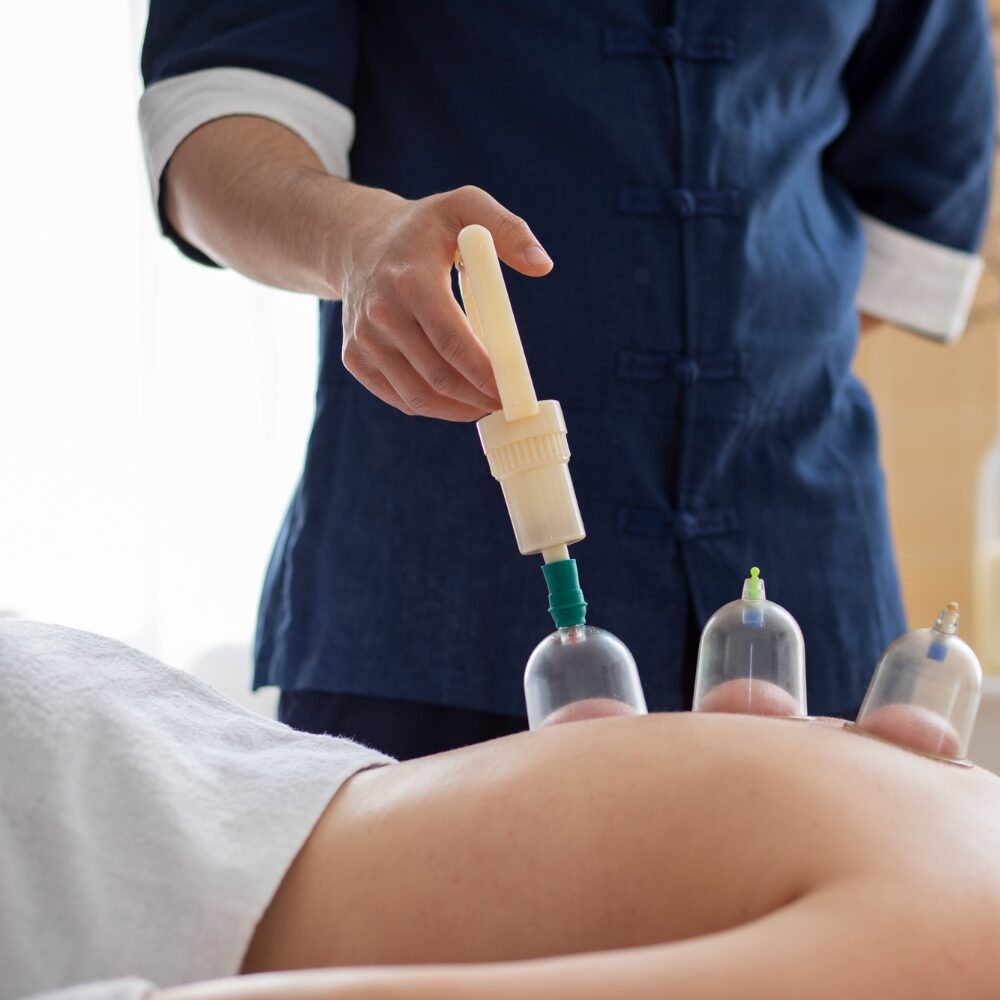
Step 2 — Dry Cupping (Suction Phase) Cups are placed on specific points and suction is applied. This draws blood to the surface and begins the therapeutic process. Most clients describe the sensation as a firm but comfortable pulling pressure.
Step 3 — Superficial Scarification A fresh, sterile, single-use blade makes tiny, shallow marks on the skin. These are not deep cuts — most clients say it feels like a light scratch.
Step 4 — Wet Cupping (Extraction Phase) Cups are reapplied. A small amount of stagnant blood is drawn out. This is where the core detoxification and therapeutic benefit occurs.
Step 5 — Aftercare Application The area is cleaned and dressed. Black seed oil or olive oil may be applied. You will receive clear written aftercare instructions before you leave.
Wondering what the experience really feels like from a client’s perspective? Read: What I Felt During My Hijama Session: A Real Experience
After Your Session
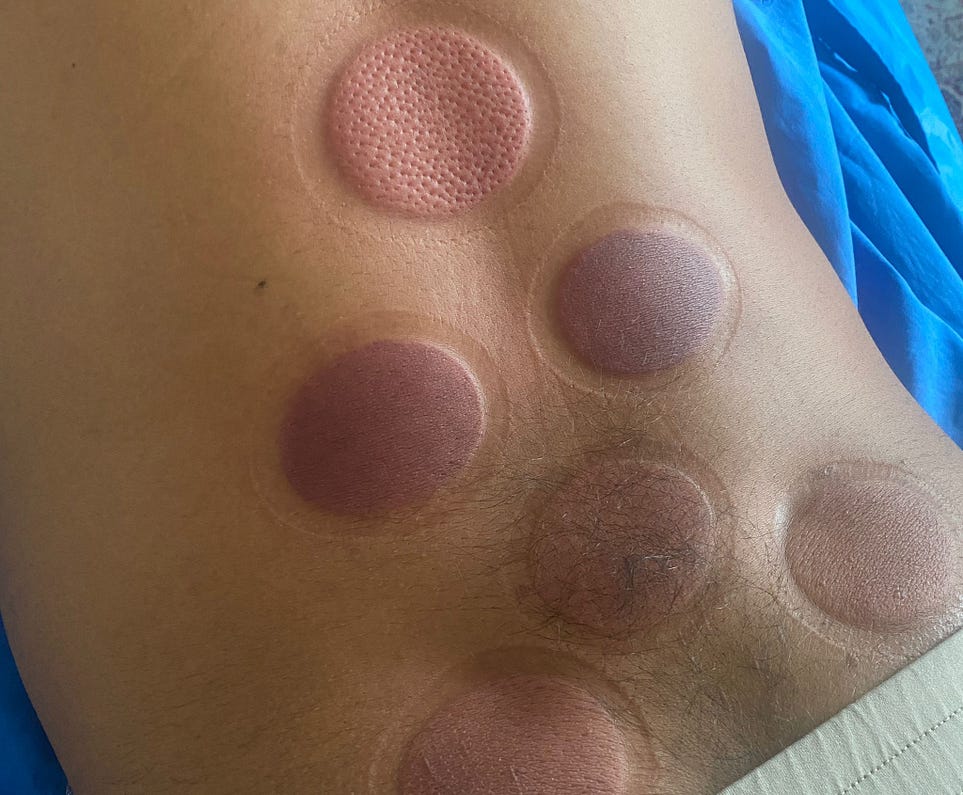
- Circular marks appear at the cupping sites these are normal, not bruises, and typically fade in 24–72 hours
- Drink warm water and rest where possible
- Avoid cold food, cold showers, and intense exercise for 24 hours
- Apply black seed oil or olive oil to the treated areas
- Some clients feel sleepy or emotionally tender in the first 24 hours this is a healing response, not a problem.
- Read more: Feeling Sleepy After Hijama Why It Happens
Curious about what your body is doing in the hours after your session? We have a detailed breakdown: What Happens Inside Your Body in the 72 Hours After Hijama
8. How Often Should You Have Hijama Done?
This is one of the most common questions I receive and the honest answer is: it depends on why you’re coming.
For general wellness and Sunnah practice: Every 3–4 months is the standard recommendation, ideally timed to the Sunnah lunar dates. Learn more on our Sunnah Days page and our guide: What Are the Best Islamic Dates for Hijama Therapy?
For chronic pain (back pain, sciatica, migraines): A series of 3–6 sessions spaced 4–6 weeks apart is typical, followed by a reassessment.
For hormonal issues (PCOS, irregular cycles, fatigue): A personalized protocol developed after your initial consultation.
For athletes and active recovery: See our dedicated page: Hijama for Athletes Enhancing Performance and Recovery
Every body is different. We create a personalized protocol for every client — not a one-size-fits-all package.
9. Hijama for Specific Conditions
Back Pain, Sciatica, and Musculoskeletal Pain
Hijama is among the most well-documented complementary therapies for musculoskeletal pain. The American College of Physicians has listed cupping as a complementary option for chronic lower back pain. Our Hijama for Stress and Pain Relief page covers this in more depth.
Several of our clients like Raisa, who pulled a muscle in her back came to us after heat packs, medication, and massage provided only temporary relief. After a single session, she described being able to stand upright, drive, and move without pain. That’s the power of addressing the root cause.
Migraines and Headaches
Wet cupping applied to the upper back and neck has centuries of use for headache relief. Saba, one of our clients, shared that she had severe migraine episodes and after Hijama, they became significantly more manageable. Clinical research supports measurable improvements in migraine frequency and severity with wet cupping therapy.
Hormonal Imbalances, PCOS, and Women’s Health
Many sisters come to us seeking natural support for PCOS, irregular menstruation, fertility challenges, and postpartum recovery. Hijama can improve circulation to reproductive organs and support hormonal balance as part of an integrative approach.
Please Visit: Hijama for Women in Canada
We also offer specific Sunnah Points for Ladies carefully selected therapeutic points with deep roots in Prophetic medicine.
Fibromyalgia and Chronic Fatigue
Living with fibromyalgia is physically and emotionally exhausting. Hijama has shown promise in reducing the widespread pain and fatigue associated with this condition.
Read our clinical breakdown: Hijama for Fibromyalgia A Natural Approach to Chronic Pain Relief
Skin Conditions and Facial Rejuvenation
Our facial cupping therapy in Scarborough is one of our most popular services. It improves circulation to the face, reduces puffiness, supports lymphatic drainage, and gives the skin a genuine, natural glow without needles or chemicals.
For deeper skin concerns like pigmentation, read: Best Hijama Wet Cupping Points for Pigmentation
Anxiety, Stress, and Mental Clarity
The nervous system responds powerfully to Hijama. Many clients leave feeling lighter, calmer, and more clear-headed often within hours of their session. This is not coincidence; it reflects real physiological changes in circulation, cortisol levels, and the parasympathetic nervous system response.
For women specifically dealing with cortisol dysregulation, Rabia’s book Cortisol Detox for Women pairs the nutritional and lifestyle side with cupping therapy for a comprehensive reset.
Hijama for Seniors
Older adults often carry decades of pain, stiffness, and circulatory challenges that respond well to gentle cupping. Our Hijama for Seniors page covers how we adapt the therapy for older clients with comfort and safety in mind.
10. Frequently Asked Questions
1.Is Hijama painful?
Most clients are surprised by how mild it is. The suction creates a pulling, tightening pressure not sharp pain. The incisions are extremely superficial. Saba (one of our clients who was nervous before her first session) described leaving feeling “so soothed and calm.” That’s the most common reaction.
2.Is Hijama safe?
When performed by a properly trained, certified practitioner using sterile equipment in a clinical environment yes, absolutely. The risk comes from unqualified practitioners, reused equipment, or ignoring medical contraindications.
3.How much does Hijama cost in Scarborough / Toronto?
At Hijama Natural Healing, sessions range from $70 to $200 CAD depending on the type of cupping. View our full pricing list on the home page or contact us to ask about your specific needs.
4.Can I get Hijama while pregnant?
No. Hijama is not recommended during pregnancy. If you are trying to conceive, speak with us during your consultation so we can guide you appropriately.
5.Can non-Muslims receive Hijama?
Absolutely. The therapeutic benefits of Hijama improved circulation, pain relief, detoxification are available to everyone regardless of faith or background.
6.How long do the cupping marks last?
Typically 24–72 hours. In some cases where there is significant stagnation, they may last up to a week. They are not bruises they are signs of circulation being restored to the area.
7.Should I fast before Hijama?
A 2–3 hour fast is standard. For those observing Sunnah timing (fasting from Fajr), that is respected and encouraged. Your practitioner will guide you based on your session type.
8.What is the difference between Hijama and regular cupping?
Dry cupping uses suction only no skin incision. Wet cupping (Hijama) includes a controlled incision phase to draw out stagnant blood. Wet cupping is more intensive and requires a higher standard of training and hygiene. We offer both types at our Scarborough clinic.
9.What is head cupping?
Head cupping (Al-Qama) targets the scalp and is referred to in Islamic medicine as addressing the “mother of diseases.” It has been used for migraines, memory issues, hair loss, and clearing mental fog. It is one of our most requested services.
10.How do I know if the Hijama worked?
You may feel tired or emotionally soft in the first 24 hours this is normal and a sign the body is processing. Most clients report feeling significantly lighter, more energetic, and with noticeably reduced pain within 48–72 hours. Read the full breakdown: What Happens Inside Your Body in the 72 Hours After Hijama
11.Does Hijama help with fertility?
Many clients seeking support for fertility, PCOS, and hormonal balance have found Hijama to be a meaningful part of their wellness journey. It should be used as a complement to, not a replacement for, medical care. See: Hijama for Women in Canada
12.Do you offer Hijama for men?
Yes. Read our dedicated page: Hijama for Men
Read our page: Hijama for Men
11. Ready to Book Your Hijama Session in Scarborough?
You’ve read this far because you care about your health and you want to make the right choice. I respect that. It’s exactly the kind of thoughtfulness that makes for a meaningful Hijama experience.
At Hijama Natural Healing, every session is conducted with:
| ✅ Full certification (HNA & IPHM) verifiable on request | ✅ Liability insurance | ✅ Disposable, sterile single-use equipment only |
| ✅ Thorough health consultation before every first session | ✅ Female practitioner no male access to sisters’ sessions | ✅ Personalized aftercare guidance |
| ✅ Sunnah-aligned practice with deep Islamic knowledge | ✅ 68+ verified five-star Google reviews from the GTA community |
We serve Scarborough, Toronto, Markham, Pickering, Ajax, Oshawa, and the surrounding GTA.
📞 Book Your Session Today
Hijama Natural Healing 📍 4301 Kingston Road, Scarborough, Ontario, Canada
First time? Call or WhatsApp us first we are happy to answer every question before you commit to anything.
(289) 242-7004
First time? Call or WhatsApp us first we are happy to answer every question before you commit to anything.
(289) 242-7004
Also Explore
- A Guide to Cupping Therapy Hijama: Rabia Anjum’s book, available on Amazon
- Cortisol Detox for Women: Natural hormone reset through lifestyle and cupping
- Join Our Community Forum: Ask questions, share your experience
- FAQs Page: Detailed answers to common Hijama questions
- Sunnah Days Calendar: Best Islamic lunar dates for Hijama
“The best of your treatments is cupping.” Prophet Muhammad ﷺ (Sahih Al-Bukhari 5371)
Disclaimer: This article is written by a certified Hijama practitioner for informational purposes. It is not intended as medical advice. Please consult your physician before beginning any new therapy, particularly if you have existing health conditions or are taking medication.