
No products in the cart.
What Is Seed Cycling & How Does It Affect Our Body?
Seed cycling involves consuming particular seeds in a bi-phased manner in coordination with the menstrual cycle.
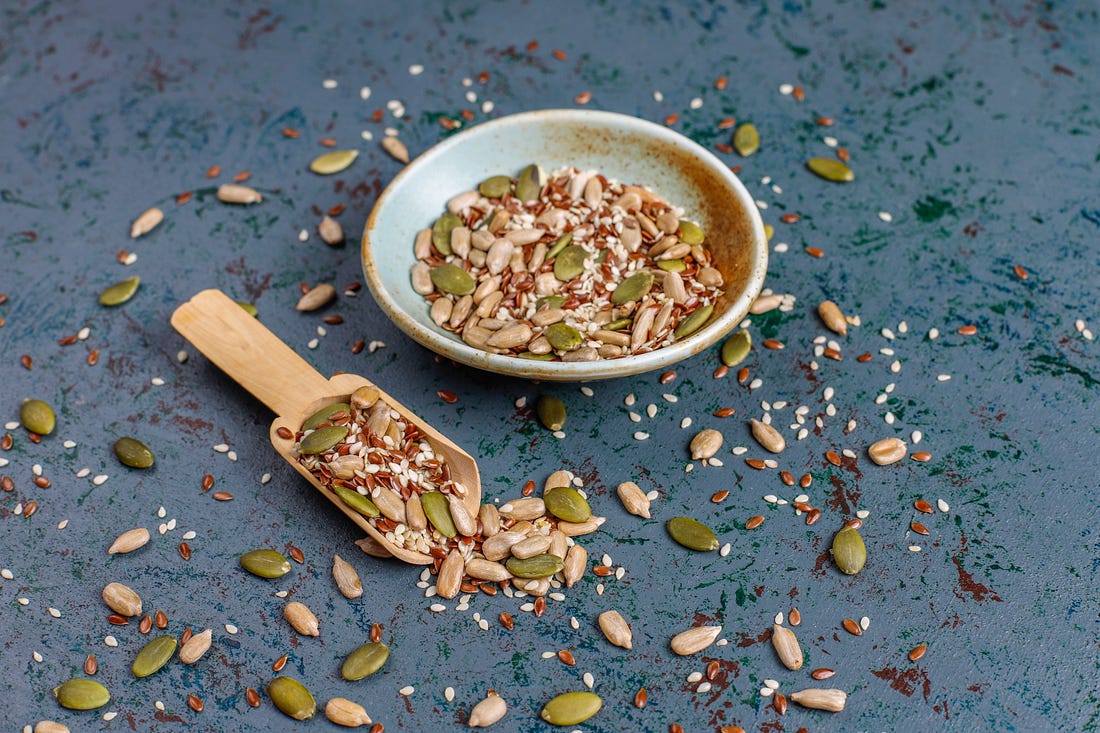 Image by azerbaijan_stockers on Freepik“/>
The practice of “Seed Cycling” has unknown origins; however, it has roots in Chinese Medicine Dietary Therapy, which emphasizes “food as medicine.” Some naturopathic practitioners have reported that the practice gained popularity in the late 2000s. The idea of using food to enhance hormonal health has been popularized by modern functional medicine and holistic health practitioners and originated in ancient traditional medical systems such as Ayurveda and Traditional Chinese Medicine (TCM). These systems employed food-based therapies to regulate hormones, as they recognized the importance of diet for reproductive health.
According to the theory, seed cycling balances hormones by controlling progesterone in the second part of your menstrual cycle and estrogen in the beginning.
The Science Behind the Menstrual Cycle
The menstrual cycle is a natural, recurring process in the female reproductive system. It prepares the body for pregnancy and lasts 28 days, though it can range from 21 to 35 days. The cycle comprises four main phases, each controlled by hormones.
1. Menstrual Phase (Days 1–5) — Period Starts
The cycle begins with menstruation, where the uterus sheds its lining if pregnancy does not occur. Low levels of estrogen and progesterone trigger the shedding. Symptoms include Bleeding, cramps, fatigue, and mood changes.
2. Follicular Phase (Days 1–14) — Egg Maturation
The brain releases follicle-stimulating hormone (FSH), which stimulates the ovaries to grow follicles. One follicle becomes dominant and releases estrogen. This phase overlaps with menstruation and ends with ovulation. Symptoms include increased energy, improved mood, and clear skin.
3. Ovulation Phase (Around Day 14) — Egg Release
A luteinizing hormone (LH) surge causes the ovary to release a mature egg into the fallopian tube. The egg survives for 12–24 hours, and if sperm is present, fertilization may occur. Symptoms may include a slight rise in body temperature and tiredness.
4. Luteal Phase (Days 15–28) — Preparing for Pregnancy or Period
After ovulation, the empty follicle produces progesterone, maintaining the uterine lining. If fertilization does not occur, progesterone drops, leading to menstruation. If pregnancy occurs, progesterone remains high to support implantation. Symptoms include PMS (bloating, mood swings, cravings, fatigue) and breast tenderness. Once progesterone levels drop, menstruation begins again, starting a new cycle.
Method of Seed Cycling
Seed cycling involves consuming different seeds during the two main phases of the menstrual cycle:
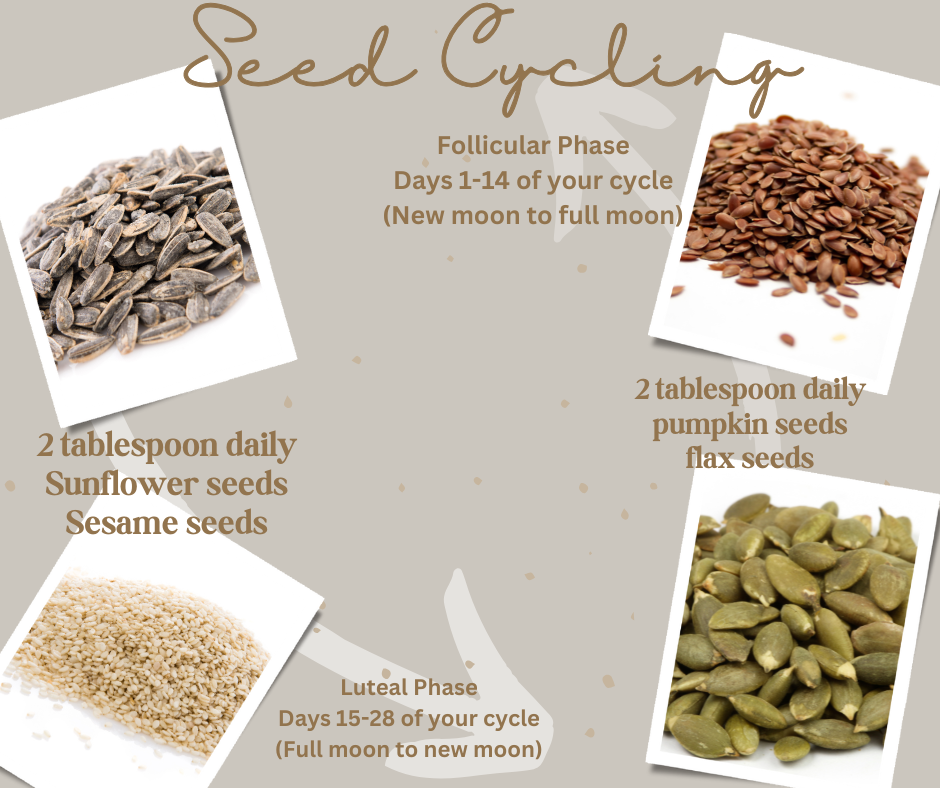
- Follicular Phase (Days 1–14, from menstruation to ovulation)
- Seeds: Flaxseeds and pumpkin seeds
- Purpose: These seeds help support estrogen production and metabolism. Flaxseeds contain lignans, which may help regulate estrogen levels and ovulation, while pumpkin seeds provide zinc, which supports progesterone production for the next phase.
2. Luteal Phase (Days 15–28, from ovulation to menstruation)
- Seeds: Sesame seeds and sunflower seeds
- Purpose: These seeds promote progesterone balance. Sesame seeds also contain lignans to modulate estrogen levels. It has also been linked with reducing dysmenorrhea, while sunflower seeds are rich in selenium, supporting liver detoxification, balancing hormones, and reducing symptoms of PMS.
In the case of amenorrhea (missing Periods) or irregular periods, the method of seed cycling should be followed by the moon’s phases. The moon holds incredible power — it influences ocean tides, impacts our center of gravity, and even affects the menstrual cycle. Interestingly, both the lunar cycle and the average menstrual cycle span 28 days.
Seed Cycling With the Phases Of the Moon
- Days 1–14 (new moon to full moon), eat pumpkin and flaxseeds.
- Days 15–28 (full moon to new moon), eat sunflower and sesame seeds.
How to Incorporate Seed Cycling
- Consume 1 tablespoon each of the recommended seeds daily.
- Ground seeds are preferred for better nutrient absorption.
- Seeds can be added to smoothies, yogurt, oatmeal, or salads.
- The practice is usually followed for at least three months to observe potential benefits.
Benefits of Seed Cycling
Though scientific research on seed cycling itself is limited, individual seeds have well-documented health benefits:
1-Hormonal Balance — Supports estrogen and progesterone regulation, potentially easing PMS and menopausal symptoms.
2-Menstrual Cycle Regulation — This may help those with irregular cycles or PCOS.
3-Fertility Support — Nutrients in seeds may contribute to reproductive health.
4-Reduced PMS Symptoms — Some women report relief from bloating, mood swings, and cramps.
5-Better Skin and Hair Health — Nutrients like omega-3s and zinc promote skin and hair health.
6-Improved Digestion — Seeds are rich in fibre, supporting gut health and aiding digestion and nutrient absorption.
7-Supports Thyroid Health — Seeds like flax and sesame contain nutrients that support thyroid function, which controls metabolism.
8-Reduces Cravings & Stabilizes Blood Sugar — Healthy fats and fibre in seeds help prevent energy crashes and sugar cravings.
9-Reduces Inflammation — Omega-3s and antioxidants in seeds may help reduce inflammation.
Women’s hormones function in a delicate balance but can be easily influenced by factors like diet, exercise, sleep, stress, and environmental toxins. When disrupted, even a slight hormone imbalance can contribute to issues such as irregular periods, acne, PCOS, thyroid disorders, and chronic fatigue.
Seed cycling is a simple yet effective way to support hormone balance naturally. It can help regulate menstrual cycles, reduce PMS symptoms, boost fertility, and even encourage menstruation in cases of amenorrhea. While not a standalone cure, when combined with other hormone-supporting practices, seed cycling harnesses the healing power of food to promote overall well-being.