
No products in the cart.
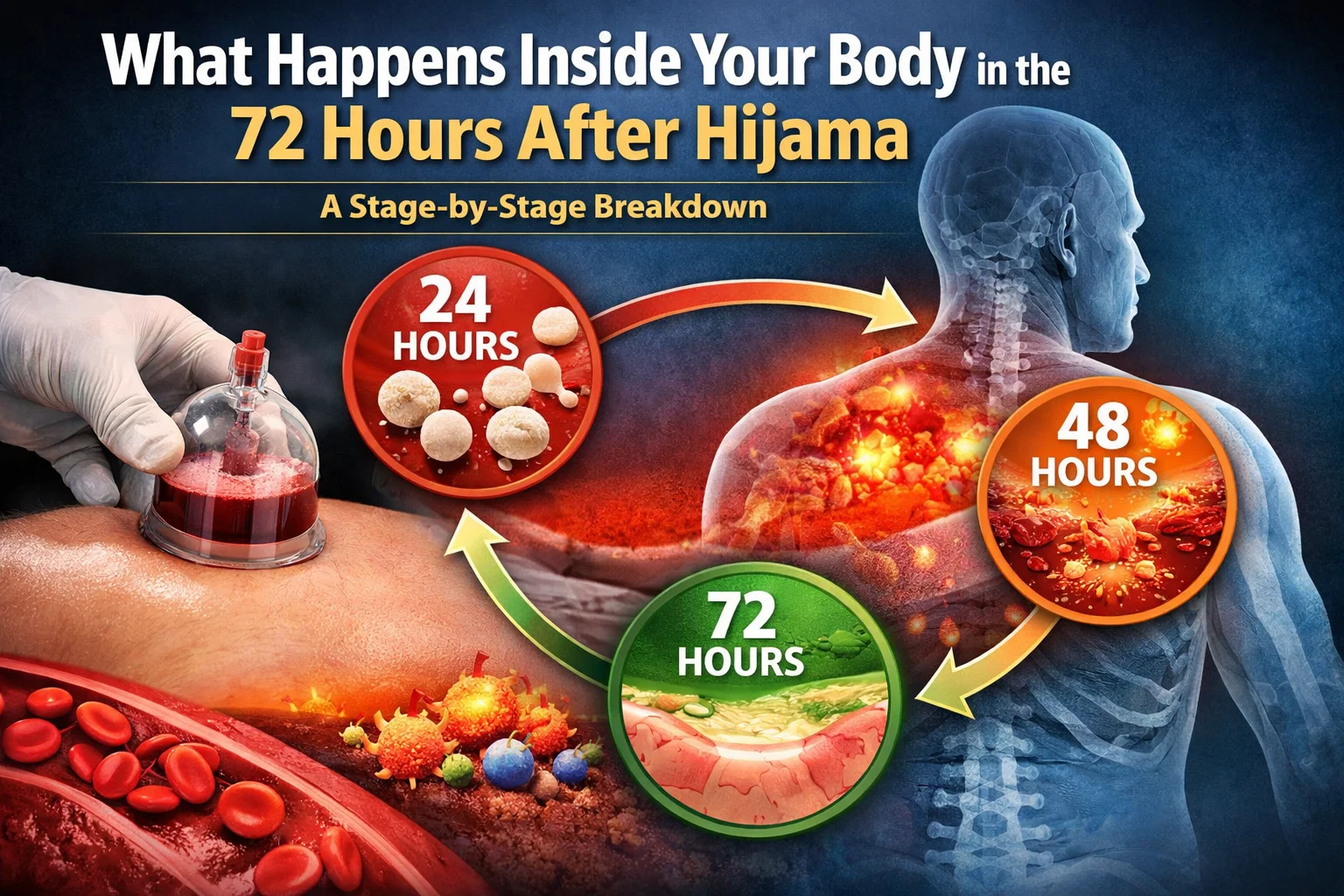
What Happens Inside Your Body in the 72 Hours After Hijama — A Stage-by-Stage Breakdown
Most guides tell you what to do after a session. Nobody has really explained what your body is actually doing, hour by hour, in the three days that follow. Until now.
Rabia Anjum – Certified Hijama Practitioner
★★★★★Verified practitioner content — Hijama Natural Healing, Scarborough, Ontario
In this article
- Why nobody explains what happens after
- Hours 0–6: The acute inflammatory response
- Hours 6–24: The cleanup crew arrives
- Hours 24–48: The rebuilding phase
- Hours 48–72: The resolution window
- What the marks on your skin are actually telling you
- Warning signs vs normal reactions
- Frequently asked questions
You’ve had your Hijama session. The cups are off, the marks are there, and you’re home maybe a little tired, maybe feeling oddly light. And then you wonder: what is actually happening inside my body right now?
I’ve been asked this question more times than I can count, usually in a WhatsApp message a few hours after the session: “Is it normal to feel cold?” “Why do I feel emotional?” “My marks went dark purple overnight is that okay?”
The truth is, Hijama triggers a remarkably intelligent sequence of biological responses. Most aftercare guides will tell you to drink water and rest. That advice is correct, but it doesn’t explain the why, and when you understand the why, everything your body does in those 72 hours makes complete sense. You stop worrying, and you actually cooperate with the process rather than fighting it.
This is the guide I wish existed when I started practicing. Nothing like this exists in one place anywhere online. Let’s go through it stage by stage.
Why nobody explains what happens after
Hijama has extensive literature on how to perform it where to place cups, timing according to Sunnah, which points address which conditions. What’s thin on the ground is honest, detailed explanation of post-session physiology in plain language.
Part of the reason is that cupping research often focuses on outcomes (did pain reduce? did blood pressure improve?) rather than the biological mechanism in between. Part of it is that practitioners come from a traditional background where “rest and drink water” has always been sufficient guidance.
But today’s clients are different. They’ve read medical studies. They’re skeptical and curious. They want to know why the tiredness happens, why some people feel worse before they feel better, why the marks from last Tuesday are still faintly visible. These are fair questions that deserve real answers.
Hours 0–6: The acute inflammatory response
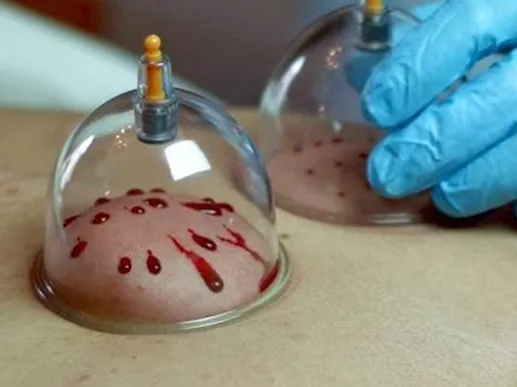
This is the phase most people notice without understanding. In the first six hours after a wet cupping session, your body is doing something it’s very, very good at: mounting a controlled inflammatory response.
When the cups are placed and suction is applied, blood and interstitial fluid are drawn toward the skin’s surface. In wet cupping (Hijama), small incisions then allow a portion of stagnant, degraded blood to exit — blood that has been sitting in areas of poor circulation, carrying old cellular waste, inflammatory markers, and in some cases, excess cortisol or histamine that the body hasn’t processed efficiently.
What your body is doing right now
- Histamine is released locally this triggers the familiar redness, warmth, and mild swelling around the cupping sites.
- Platelets rush to the micro-incision sites and begin forming clots your natural wound-sealing mechanism.
- Your nervous system shifts toward parasympathetic dominance (the “rest and digest” mode). This is why you feel sleepy, calm, sometimes spacey.
- Core body temperature may drop very slightly as blood redistributes. This explains why many clients feel cold or shivery after a session, even on a warm day.
- Some people feel a wave of emotion mild tearfulness or unusual calm. This is a nervous system response, not a psychological one.
Hours 6–24: The cleanup crew arrives
By the time you wake up the morning after your session, the acute phase has passed and something more interesting is happening beneath the skin.
Your immune system has dispatched macrophages large white blood cells to the cupping sites. Their job is to engulf and break down the extravasated blood (the blood that seeped into the subcutaneous tissue during cupping). This is a totally normal, healthy process called phagocytosis, and it’s the same mechanism that resolves bruises anywhere on your body.
Hours 6–24
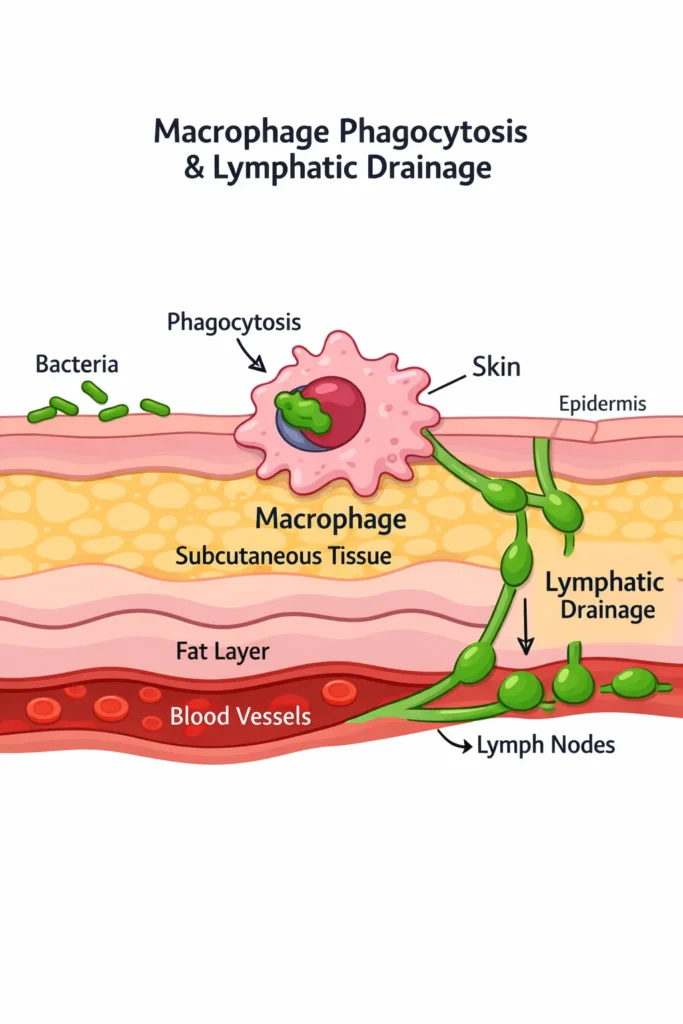
The lymphatic system becomes your best friend
- Lymph nodes in the region begin processing debris from the cupping sites. This can cause mild tenderness in nodes near the session area.
- The liver receives a slightly elevated load as it filters the breakdown products being released into circulation.
- Urine may appear darker than usual — this is partly the kidneys excreting filtered waste and is a sign the system is working.
- Some clients feel unusually hungry. Healing is metabolically expensive — your body wants fuel.
- Light-headedness upon standing is common in this window. Stand up slowly. Hydration matters enormously here.
“The marks left by cupping are not damage. They are the map of where your body chose to focus its healing.”
Hours 24–48: The rebuilding phase
This is the phase most people never hear about, and it’s arguably the most important.
By 24 hours post-session, the acute inflammatory response is winding down and a different process is starting: tissue remodeling and micro-circulation restoration. New capillary connections are stimulated in areas where blood flow was previously sluggish. Fibroblasts (cells that build connective tissue) are activated in the dermis. Local production of nitric oxide a natural vasodilator increases, which keeps those new pathways open.
Where the real healing happens
- Improved circulation in treated areas often produces a noticeable warming sensation — the opposite of the post-session chill.
- Muscle tension that was present before the session may feel significantly reduced as blood flow normalizes.
- Sleep in this window tends to be deeper than usual. Growth hormone (which is released during deep sleep) plays a key role in tissue repair.
- Skin over cupping marks may feel slightly itchy — a sign of active healing, not infection.
- Energy levels can swing. Some people feel remarkable clarity; others still feel tired. Both are normal and depend on your baseline health and how much work your body had to do.
Hours 48–72: The resolution window
By the third day, most of what your body needed to do in response to the session has been done. This is when clients typically report feeling — in their own words — “lighter,” “cleaner,” or “clearer.” That’s not placebo. That’s resolution.
Coming back to baseline and beyond
- The extravasated blood at cupping sites has been mostly reabsorbed. Marks are visibly fading.
- Cortisol levels (if they were elevated before your session) tend to be measurably lower in this window. Multiple studies on cupping and stress hormones support this.
- Pain reduction becomes more apparent now than immediately after the session. This is because the nervous system’s pain-signaling pathway has been interrupted at the treatment points.
- Bowel movements may change — some people notice improved regularity. This is the vagal nerve and gut-lymph connection responding to the parasympathetic shift from your session.
- You may feel ready to exercise. Light walking from day 3 is fine. Intense training should wait until day 4 or 5.
What the marks on your skin are actually telling you
The color of your cupping marks is one of the most useful diagnostic signals in Hijama practice, and it changes across the 72 hours. Here’s how to read them:
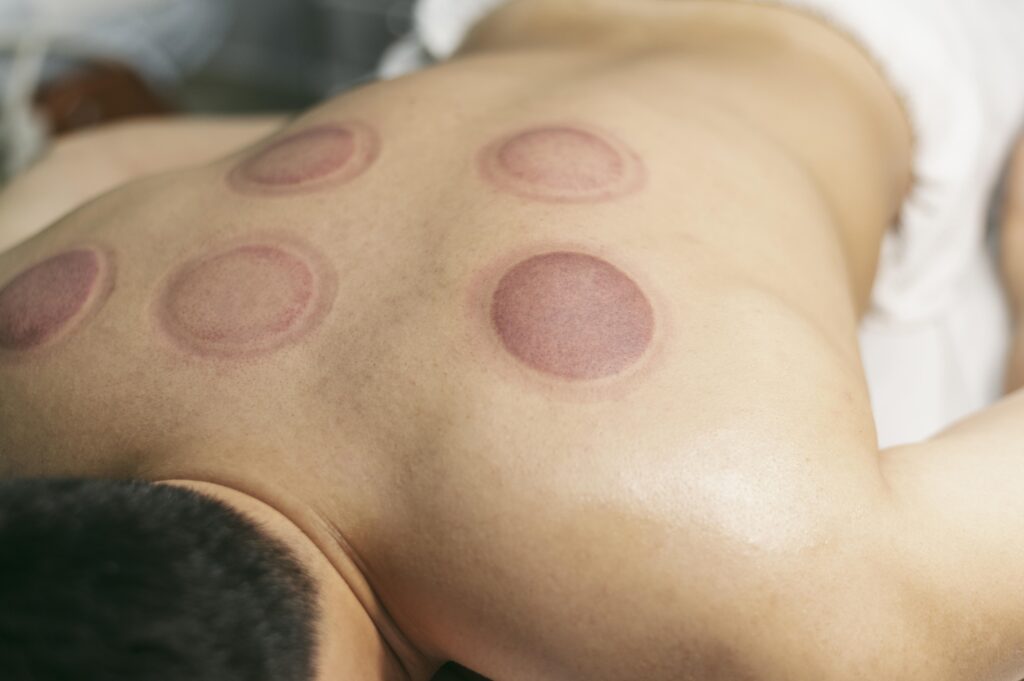
●Pale pink or light red: Healthy circulation in that area. Minimal stagnation. These marks usually disappear within 2–3 days.
●Bright red: Active inflammation in that region before the session. Heat, acute pain, or early-stage conditions often show this color.
●Dark red to maroon: Moderate to significant blood stagnation. Common in areas with chronic muscle tension or long-standing pain. Takes 5–7 days to resolve.
●Purple to near-black: Deep stagnation, often associated with chronic conditions, cold in the channels (as described in traditional medicine), or areas that have had long-term circulatory compromise. These marks take the longest to fade sometimes 10–14 days.
●Yellow or pale: Lymphatic accumulation or cold-damp pattern in traditional terms. Often seen in clients with hormonal imbalance or sluggish metabolism.
With each subsequent session — assuming proper intervals most practitioners observe that marks become progressively lighter in previously dark areas. This is considered a positive sign that stagnation is resolving.
Normal reactions vs warning signs — knowing the difference
In over a decade of practice, genuine complications from properly performed Hijama are rare. But you should still know what’s normal versus what warrants a call to your practitioner.
Completely normal in the 72-hour window:
- ✓Fatigue and desire to sleep more than usual
- ✓Mild soreness or tenderness at cupping sites — like a light bruise
- ✓Feeling cold or slightly shivery in the first few hours
- ✓Emotional release — mild tearfulness or unexplained calm
- ✓Thirst and increased need for water
- ✓Slight headache on day 1 — especially if you were dehydrated before your session
- ✓Marks darkening in the first 12 hours before beginning to fade
Contact your practitioner if you notice:
Signs of infection at wet cupping sites (increasing heat, swelling, pus, or red streaks from the site), fever above 38.5°C that doesn’t resolve by day 2, marks that are not improving at all by day 10, or severe pain (not mild tenderness) that is worsening rather than improving. These are rare but know the difference between healing discomfort and a signal that something needs attention.
Questions clients ask me that nobody else seems to answer
1.Why do I feel worse on day 2 than day 1?
This is called a “healing reaction” and it’s particularly common in clients with significant stagnation or chronic conditions. Day 2 is when the lymphatic system is doing its heaviest work — processing waste, clearing cellular debris, filtering metabolic byproducts. The body’s internal environment is temporarily more burdened before it becomes less burdened. Think of it like cleaning a very messy room: it gets messier in the middle before it’s clean. If day 2 symptoms are moderate, increase water intake and rest. If they are severe, contact your practitioner.
2.My marks are completely gone in 2 days. Does that mean Hijama didn’t work?
No. Pale marks that resolve quickly indicate good baseline circulation and relatively healthy blood in that area. Hijama “worked” it just found less to work with in terms of stagnation. This is actually a good sign. Clients with lighter marks are often those who maintain their health well between sessions.
3.Can I fast after Hijama?
The traditional Sunnah recommendation is to perform Hijama while fasting, not to fast after it. Post-session, your body needs easily accessible fuel to support the repair process. Light, clean eating in the 24 hours after is strongly recommended. If you intend to fast (e.g., Ramadan context), discuss the timing with your practitioner we often adjust session schedules accordingly.
4.I felt fine immediately after but then got a headache on day 2 — why?
Day 2 headaches after Hijama almost always have one of three causes: insufficient water intake (the body is routing fluids to lymphatic processing, leaving you mildly dehydrated), blood sugar fluctuation (if you haven’t been eating regularly), or a temporary cortisol rebound as the nervous system readjusts. Drink a large glass of water, have a small meal with natural sugars (dates are perfect), and rest. Most of these headaches resolve within a few hours.
5.When is the earliest I can have another session?
The traditional recommendation is a minimum of one lunar month between sessions for most conditions. From a physiological standpoint, this makes sense the full resolution of the inflammatory response, tissue remodeling, and lymphatic clearance takes 3–4 weeks. Doing sessions too close together doesn’t compound the benefit; it taxes the same repair pathways before they’ve completed their work. For acute conditions, a practitioner might suggest a shorter interval, but this should be a practitioner-guided decision, not a client-led one.
Ready to experience Hijama with a practitioner who explains everything?
At Hijama Natural Healing in Scarborough, every session includes a full pre-treatment consultation and detailed aftercare guidance not just a printout, but a real conversation. We want you to understand your own healing
Rabia Anjum Certified Hijama Practitioner HNA · IPHM Licensed
Rabia has 14+ years of healthcare experience and runs Hijama Natural Healing in Scarborough, Ontario. She is the author of A Guide to Cupping Therapy: Hijama and Cortisol Detox for Women. Her approach combines Sunnah Hijama tradition with evidence-informed practice, and she believes that informed clients heal better.



Leave a Reply