
No products in the cart.
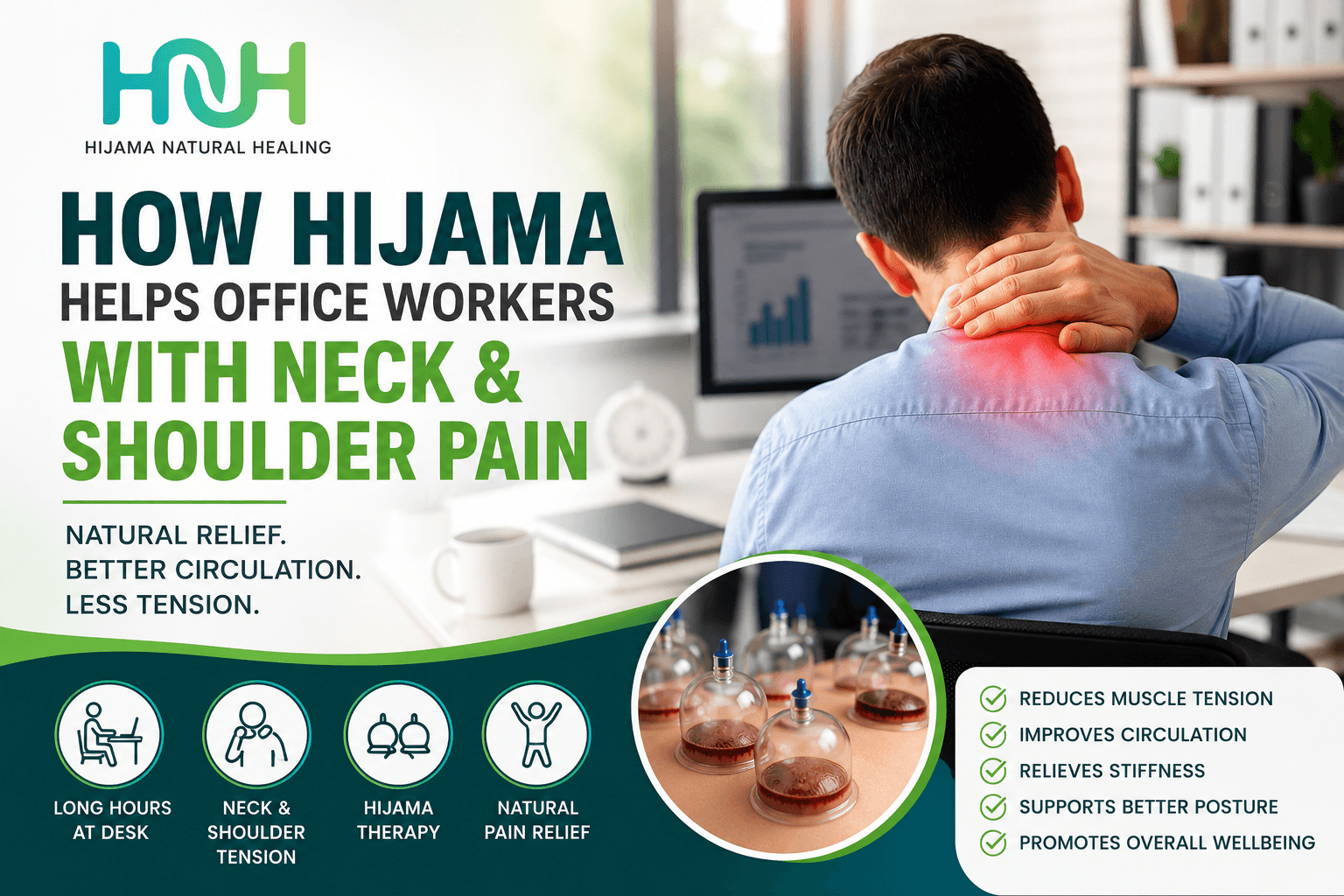
How Hijama Helps Office Workers With Neck and Shoulder Pain
Most office workers do not realize how much damage sitting does until the pain becomes part of everyday life. It usually starts small. A stiff neck after work. Tight shoulders during meetings. Headaches near the end of the day. Then suddenly stretching no longer helps, painkillers stop working properly, and even sleeping feels uncomfortable.
This has become extremely common in Canada because people spend hours sitting in front of screens with poor posture, limited movement, and constant stress. Many office workers now deal with chronic neck and shoulder tension before they even reach their 30s.
That is one reason more people are turning to hijama therapy for natural pain relief.
Hijama is not magic, and it is not some overnight fix. But when done properly by experienced practitioners, it can help reduce muscle tension, improve circulation, and give tight areas of the body a chance to relax and recover.

Why Office Workers Get Neck and Shoulder Pain So Often
The human body was never designed to sit still for 8 to 10 hours every day. Most office setups force the neck forward while the shoulders stay rounded for long periods. Over time, muscles become tight and inflamed.
Some of the biggest causes include:
- Looking down at laptops all day
- Poor desk posture
- Stress and tension buildup
- Lack of movement during work hours
- Long commuting times
- Sleeping in bad positions after already straining muscles all day
The worst part is that the pain usually builds slowly. Many people ignore it until it starts affecting concentration, sleep, workouts, or even driving.
A lot of office workers describe the feeling as:
- Constant tightness around the shoulders
- Burning pain near the neck
- Heavy upper back tension
- Pain when turning the head
- Frequent tension headaches
Massage therapy can help temporarily, but for some people the tightness returns quickly because the deeper tension never fully settles.
How Hijama Works for Muscle Tension
Hijama therapy uses controlled suction on specific areas of the body to stimulate circulation and release built-up tension. In wet cupping, small superficial incisions are made after suction to remove a small amount of stagnant blood.
For office workers, practitioners commonly focus on:
- Upper trapezius muscles
- Shoulder blades
- Neck area
- Upper back tension points
When these areas stay tight for months, blood flow becomes restricted and muscles remain in a constant stressed state. Hijama helps encourage circulation into those stiff areas.
Many patients say they feel:
- Lighter in the shoulders
- Less pressure around the neck
- Improved movement
- Reduced headache frequency
- Better sleep after sessions
Some people notice changes immediately. Others need multiple sessions depending on how severe the tension has become.
The Stress Connection Most People Ignore
One thing people rarely talk about is how emotional stress shows up physically in the shoulders and neck.
Office workers carry stress differently than manual labor workers. Instead of physical exhaustion, they deal with mental overload:
- Deadlines
- Screen fatigue
- Constant notifications
- Sitting without movement
- Poor sleep habits
The body responds by tightening muscles automatically.
That is why many office workers wake up already feeling tense before the workday even begins.
Hijama may help relax the nervous system by reducing physical tension patterns stored in the muscles. A lot of patients say they feel mentally calmer after treatment, not just physically looser.
That calming effect matters because stress and pain often feed each other in a cycle.
Why Painkillers Are Not a Long-Term Solution
A lot of office workers rely heavily on pain medication just to get through the week. The problem is that painkillers usually reduce symptoms temporarily without addressing the underlying tension.
If posture, circulation, muscle tightness, and stress remain unchanged, the pain often returns quickly.
That does not mean medication is always bad. Sometimes it is necessary. But many people are now looking for natural therapies they can combine with healthier routines instead of depending entirely on pills.
Hijama has become popular for this reason. People want something that feels more restorative instead of just numbing discomfort for a few hours.
What a Typical Session Feels Like
First-time patients are usually nervous because they do not know what to expect.
The truth is most people are surprised by how manageable the process feels.
A typical session may include:
- Consultation about pain areas
- Assessment of muscle tightness
- Placement of cups on tension points
- Controlled suction
- Wet cupping if appropriate
- Rest and aftercare guidance
The suction creates a pulling sensation, but most people tolerate it well. Areas with more inflammation or tightness can feel more sensitive.
After treatment, some soreness is normal for a short period, similar to deep tissue massage.
How Many Sessions Do Office Workers Usually Need?
There is no perfect answer because every body is different.
Someone with mild stiffness from recent desk work may feel relief quickly. Someone who has ignored severe posture problems for years usually needs ongoing sessions combined with lifestyle changes.
The biggest mistake people make is expecting one session to erase years of tension.
Real improvement usually happens when hijama is combined with:
- Better posture
- Stretching
- Regular movement
- Proper hydration
- Stress management
- Improved sleep habits
The goal is not temporary relief. The goal is reducing the patterns that keep causing pain.
Can Hijama Help With Tension Headaches Too?
In many cases, yes.
A lot of headaches actually begin with muscle tightness around the neck and shoulders. When those muscles stay inflamed, they create pressure that spreads upward into the head.
Some office workers notice their headaches become less frequent after addressing upper body tension through hijama therapy.
That said, persistent or severe headaches should always be medically evaluated first. Not every headache is caused by muscle tension.
Simple Habits That Help Between Sessions
Hijama works better when people stop putting their body under constant strain every day.
A few small changes can make a huge difference:
- Raise your monitor to eye level
- Stop looking down at your phone constantly
- Take short movement breaks every hour
- Stretch chest and shoulder muscles daily
- Stay hydrated during work hours
- Use proper chair support
- Avoid sleeping with the neck twisted awkwardly
Most people underestimate how much posture affects long-term pain.
Why More Office Workers Are Trying Natural Therapies
People are exhausted mentally and physically. Sitting for long hours while staring at screens has created a level of chronic tension many workers never experienced before.
That is why therapies like hijama are gaining attention again. People want approaches that focus on circulation, recovery, and overall wellbeing instead of masking symptoms temporarily.
For many office workers, hijama becomes part of a broader self-care routine that helps them feel more balanced physically and mentally.
Final Thoughts
Neck and shoulder pain is no longer just an “older adult” problem. Office workers in their 20s and 30s now deal with chronic tension daily because modern work habits place constant strain on the upper body.
Hijama therapy may help reduce that tension naturally by improving circulation and relaxing tight muscles that stay overworked for months or even years.
The important thing is finding a qualified practitioner who understands proper hygiene, safe techniques, and individualized treatment.
And honestly, most people wait too long before taking their pain seriously.
If your shoulders constantly feel heavy, your neck stays stiff, or tension headaches are becoming normal, your body is probably asking for attention long before the problem gets worse.