
No products in the cart.
Massage Before Hijama — Beneficial or Harmful?
Some practitioners massage the body before cupping, while others prefer to perform Hijama without massage.

Let’s discuss whether massage prepares the body for Hijama or makes the skin more sensitive.
What actually happens to our skin and muscles during massage?
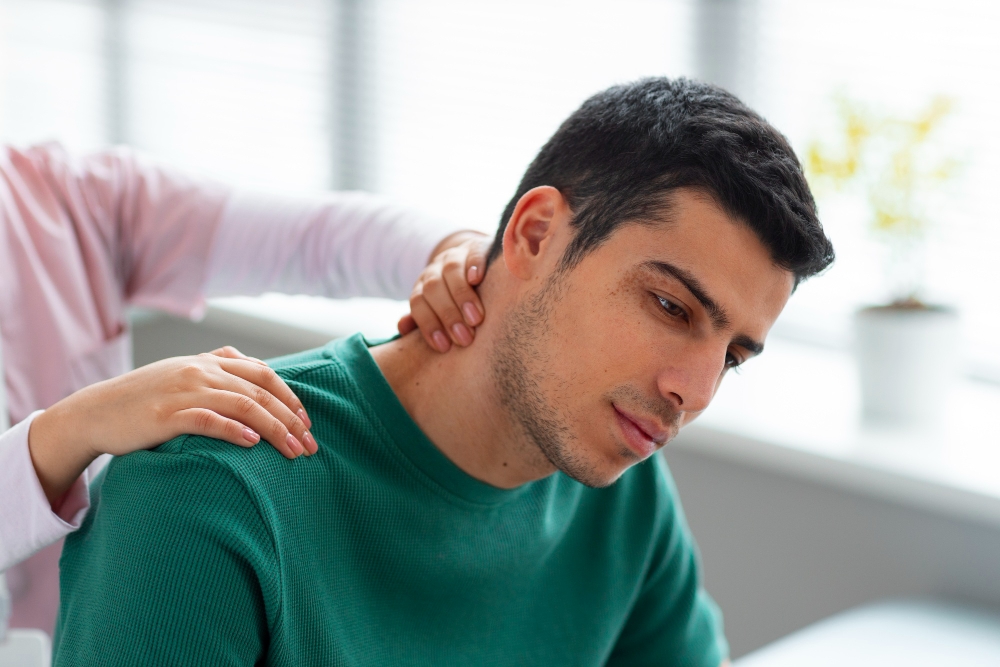
Massage involves applying pressure and movement to the body’s soft tissues, including the skin and muscles. Gentle massage may help some people feel relaxed and temporarily reduce their perception of muscle tension or discomfort. It also applies mechanical pressure to the skin and underlying tissues. The effects depend on the pressure, duration, technique, and the person’s sensitivity. However, deep or vigorous massage can cause tenderness, irritation, or bruising in some people.
This matters because Hijama also applies mechanical force to the skin through suction. So, when we combine massage and cupping, we should consider how much pressure the tissues have already experienced.
Is massage before Hijama beneficial?
There are a few possible benefits of gentle massage before cupping.
First, relaxation. A client who feels anxious or tense may find gentle touch calming.
Second, temporary relief of muscle tension. Massage may help some clients feel more comfortable before a treatment.
Third, client comfort. A gentle approach may help the client settle into a comfortable position.
Research on massage and research on cupping do not automatically prove that combining massage with Hijama produces better results. A 2025 systematic review and meta-analysis examined 72 cupping trials with 5,720 participants. Although some studies reported improvements in pain, the overall certainty of evidence was low or very low. The review did not establish that massage before Hijama improves outcomes. Therefore, we should describe massage as an optional comfort measure, not a proven way to increase the effectiveness of Hijama.
When can massage before Hijama be harmful?
If massage is too forceful, it may leave the tissues sore or cause bruising and irritation. Applying suction to already irritated or bruised skin may add further discomfort or tissue stress. Cupping itself may cause temporary skin discoloration, scarring, or burns.
For this reason, a cautious approach is sensible:
- Avoid deep, forceful massage immediately before cupping.
- Do not apply cups over bruised, inflamed, broken, or irritated skin.
- Do not assume that stronger pressure produces better results.
- If the skin becomes painful or visibly irritated, reassess the treatment rather than proceeding automatically.
What is the safer approach before Hijama?
If the client prefers massage, keep it gentle and stop if they experience pain or discomfort. There is no established scientific requirement to massage before Hijama, and no strong evidence that clients benefit from it. A professional treatment is not defined by how many techniques we combine. It is defined by sound judgment, informed consent, and safe practice.
So, is massage before Hijama beneficial or harmful?
The balanced answer is that gentle massage may help some clients relax, but it is not necessary before Hijama, and its added benefits have not been established by strong direct evidence. Deep or vigorous massage may cause bruising, soreness, or skin irritation, so it is best not to overwork the tissues before cupping.
As practitioners, we should never assume that more pressure means better results. Assess the client, check the skin, use appropriate precautions, and put safety first.