
No products in the cart.
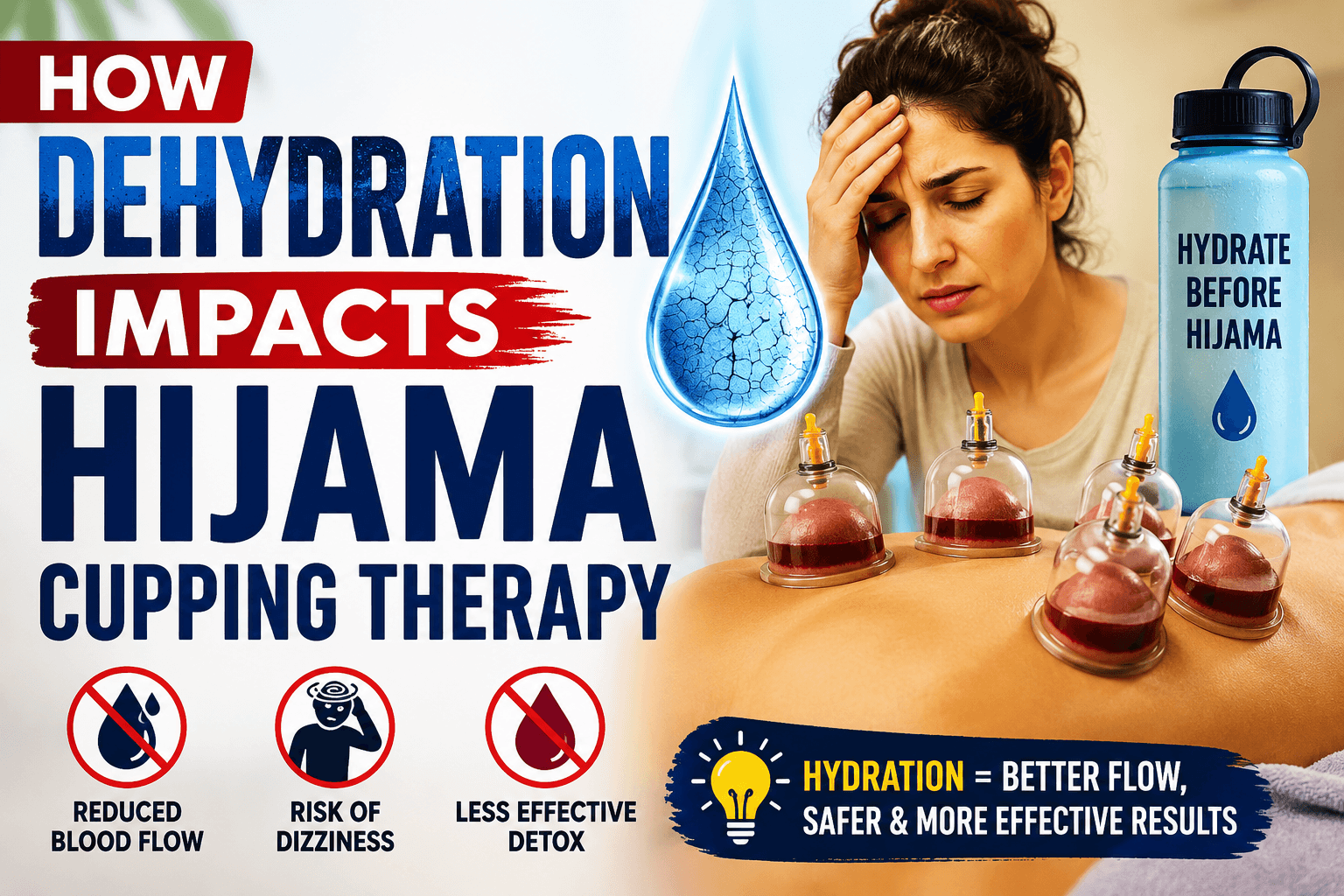
How Dehydration Impacts Hijama Cupping Therapy
Performing Hijama on a dehydrated person is not recommended because it increases the risk of side effects during and after the procedure.
As a hijama practitioner, I have noticed that, especially during the hot summer months, many clients arrive for their hijama sessions dehydrated. Surprisingly, most of them tell me they have been drinking water throughout the day. The problem is that in extremely hot weather, the body can lose large amounts of water and electrolytes through sweating, sometimes faster than they are being replaced. As a result, a person may appear well hydrated but still be mildly dehydrated. In this article, we’ll explore why dehydration matters before hijama, how to recognize its signs, and the best ways to prepare your body for a safe and effective Hijama treatment.
Why Hydration Matters Before Hijama?
Hydration plays a vital role in the safety and effectiveness of a hijama session. During wet cupping, a small amount of blood and toxic fluid is removed from the body. While this amount is minimal, if a client is already dehydrated, the body may struggle to adapt to the temporary loss of fluid.
When the body is dehydrated, the total volume of circulating blood and body fluids decreases. This can make it more difficult to maintain normal blood pressure and deliver enough oxygen to the brain and other organs.
What can happen?
1. Increased Risk of Fainting: Dehydration lowers blood volume. Combined with the stress of the procedure, this can increase the risk of a fainting episode.
2. Dizziness and Lightheadedness: The client may feel dizzy, weak, Unsteady when sitting or standing or have blurred vision.
3. Drop in Blood Pressure: A dehydrated person may already have lower blood pressure. Wet cupping may make symptoms more noticeable.
4. Faster Heart Rate: The heart may beat faster to compensate for the lower circulating blood volume.
5. Slower Recovery: Clients may feel tired or weak for longer after the session if they begin treatment dehydrated.
6. Reduced Skin Elasticity: Dehydrated skin may be less elastic, which can make superficial skin incisions and healing slightly less favourable.
Signs of Dehydration Before Hijama
Ask your client about symptoms such as:
- Dry mouth or lips
- Excessive thirst
- Dark yellow urine
- Urinating less than usual
- Headache
- Fatigue
- Dizziness on standing
What Should a Hijama Practitioner Do?
Before treatment:
- Encourage clients to drink adequate water during the day before their appointment.
- Ask about recent vomiting, diarrhea, fever, or prolonged exercise.
- If the client appears significantly dehydrated, postpone the session until they are properly hydrated.
After treatment:
- Encourage water intake.
- Recommend a balanced meal if appropriate.
- Allow the client to rest before leaving.
Salt Water’s Impact on Hijama Results
If you have been sweating heavily due to hot weather or physical activity, drinking plain water alone may not fully rehydrate your body. Sweat contains not only water but also electrolytes — especially sodium — which play a key role in maintaining fluid balance, blood pressure, and normal nerve and muscle function. Having a drink that contains both water and an appropriate amount of sodium, such as an oral rehydration solution (ORS), is a better choice than plain water for replacing these losses. If an ORS is not available, a small amount of salt added to water along with a balanced meal may help replace sodium. However, plain salt water should not be consumed in excessive amounts, as too much salt can be harmful. Before a hijama session, the goal is to arrive well hydrated, with both fluids and electrolytes replenished, especially during the hot summer. If you have high blood pressure, kidney disease, heart failure, or have been advised to follow a low-sodium diet, consult your healthcare provider before increasing your salt intake.
When might salt water be helpful?
A small amount of salt in fluids can be beneficial if someone has lost sodium through:
- Heavy sweating
- Prolonged exercise
- Working in hot weather
Other Natural sources of electrolytes
Instead of plain salt water, you can also choose:
Foods with a moderate amount of salt if you’ve been sweating heavily
Coconut water (contains potassium but is relatively low in sodium)
Broth or soup
Bananas (potassium)
Oranges
Milk